More and more people want to dedicate part of their time to making a positive impact on the world. However, along with the growth of international volunteering and social organizations, it has become increasingly important to choose projects that genuinely contribute to community development and operate with responsibility and transparency.
Volunteering not only transforms the lives of those who receive support, but also the lives of those who decide to get involved. That is why it is essential to make sure that the organization we collaborate with acts ethically, develops sustainable projects and provides clear information about its work.
In this article we share the keys to identifying ethical volunteering and a trustworthy NGO, so that your experience has a real and positive impact.
What does ethical volunteering mean?
Ethical volunteering goes far beyond traveling to help for a few weeks. It is based on respect for people, communities and the local culture, always making sure that the activities carried out respond to real needs and contribute to long-term development.
Responsible volunteering means that:
- Projects exist before volunteers arrive and continue after they return home.
- The local community takes part in decision-making and leads the projects.
- The volunteer’s work complements the work of professionals and local teams, without replacing jobs.
- Creating economic or emotional dependency is avoided.
- The well-being of children and vulnerable people always comes before the volunteer’s experience.
Responsible organizations understand that the goal is not to offer a solidarity-tourism experience, but to generate a positive, sustainable and respectful impact.
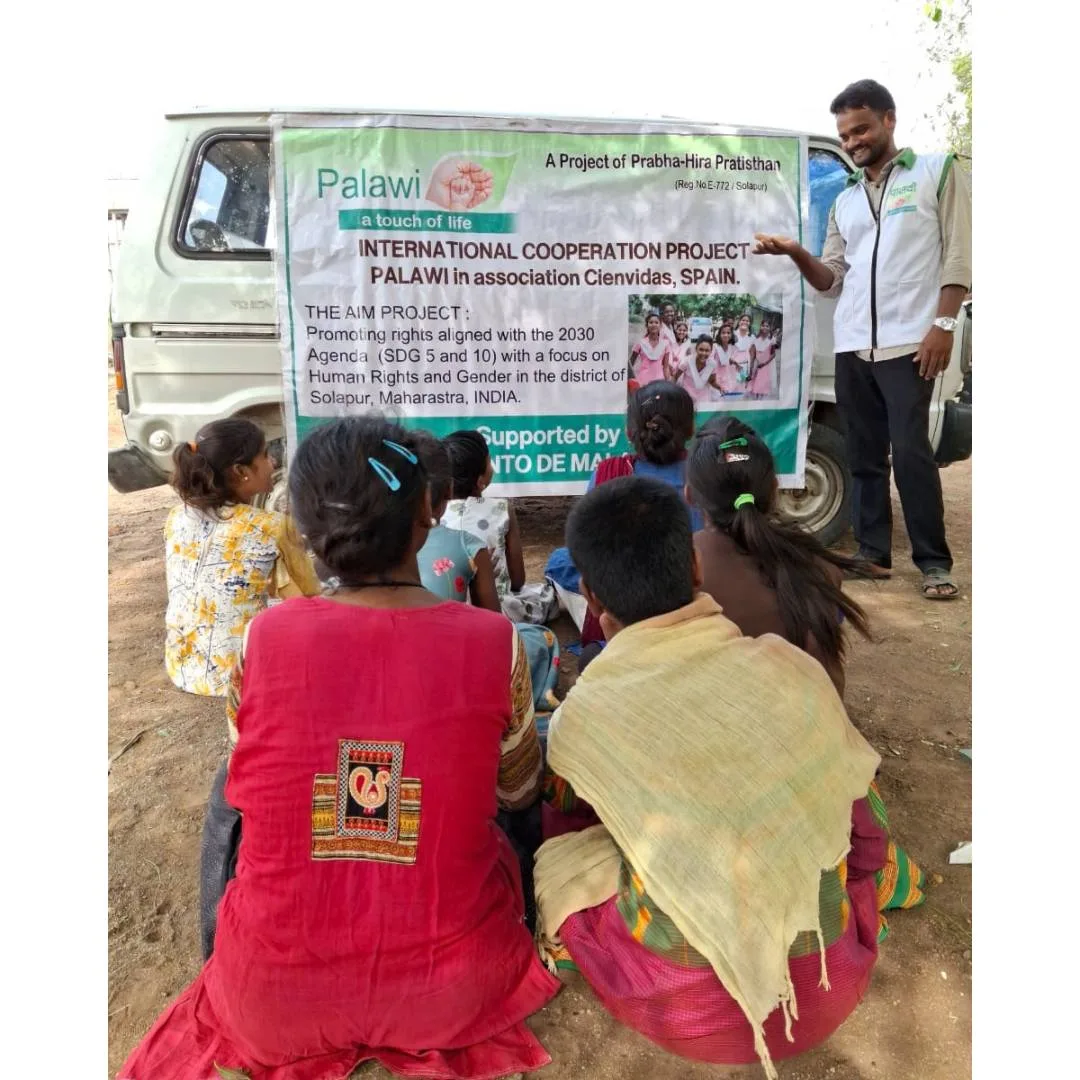
Signs of a transparent NGO
Choosing a transparent organization brings peace of mind and confidence. An NGO committed to good practices has no problem explaining how it works, how it finances its projects and what results it has achieved.
Some signs that can help you identify a reliable organization are:
- It clearly explains its mission, vision and goals.
- It publishes information about its projects and the impact achieved.
- It presents annual reports or activity summaries.
- It reports on how donations are used.
- It has real contact details and responds to inquiries.
- It has an identifiable team and a defined legal structure.
- It maintains constant communication with collaborators and volunteers.
Transparency is not just about meeting a legal obligation, but about building trust through accountability.
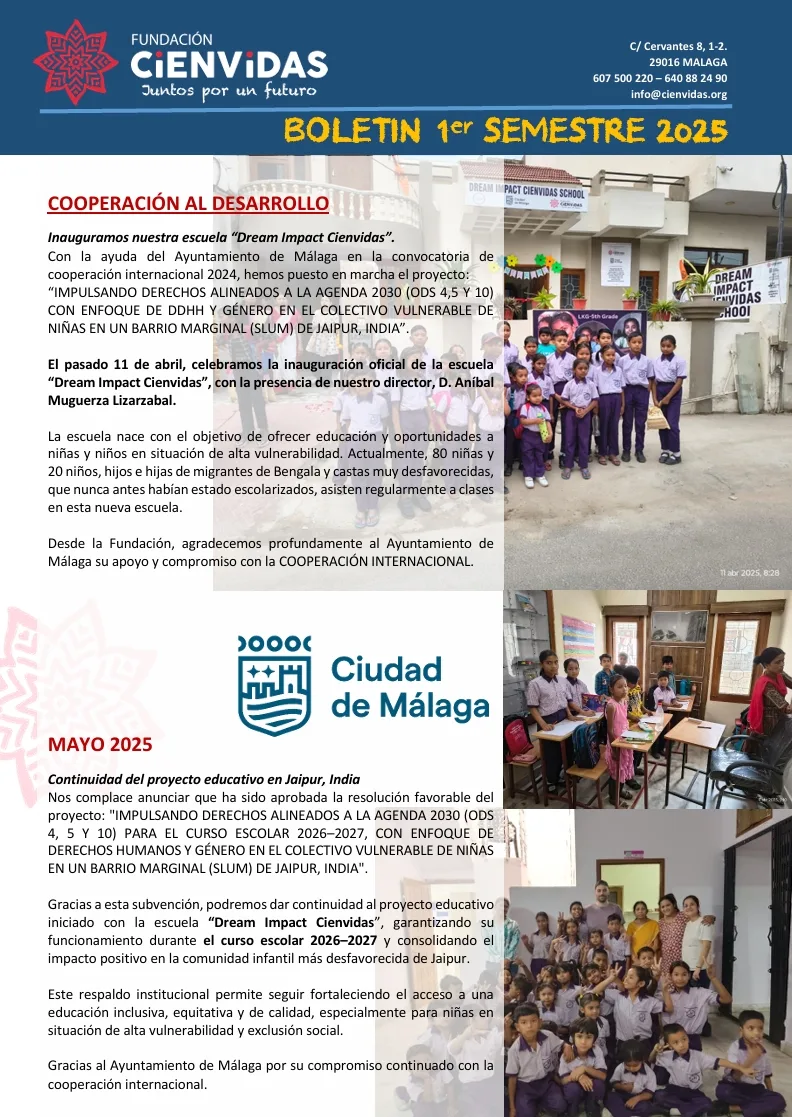
Clear information, annual report, projects and real contact
Before joining any volunteer program, it is worth spending a few minutes reviewing the available information.
A committed organization should offer:
Clear information
It should explain exactly what it does, where it works, what its goals are and how volunteers participate in each project.
Annual report
The annual report shows the activities carried out, the impact achieved during the year, how resources were used and the main accomplishments. It is one of the best indicators of transparency.
Projects
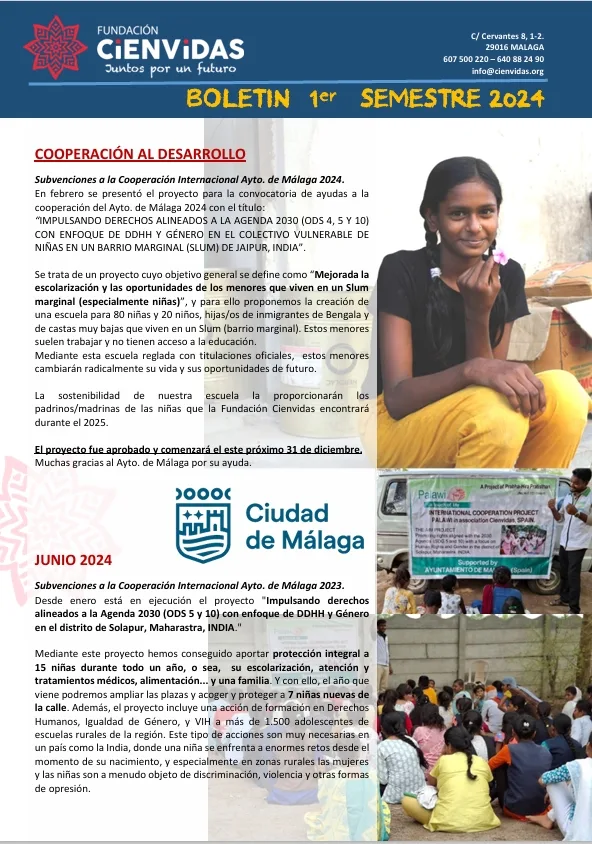
It is important to check that the projects are real, permanent and respond to specific needs of the population.
Direct contact
A trustworthy NGO provides real communication channels and answers questions before, during and after the volunteer experience. Being approachable is also part of the commitment.
Questions you should ask before signing up
Before deciding to volunteer, it is worth resolving some important questions:
- What is the real goal of the project?
- What needs does it cover?
- Who leads the project on the ground?
- How is the organization funded?
- Is there follow-up and support for volunteers?
- What exactly will the volunteer do?
- How is the project’s impact measured?
- What happens when there are no volunteers?
- Does the organization work with local partners?
- Does it publish annual reports or results?
A serious NGO will answer all these questions with transparency.
Red flags to avoid
Although there are thousands of committed organizations, there are also warning signs worth keeping in mind.
Be wary if:
- They promise to “change lives” in just a few days.
- All their communication focuses on the volunteer’s experience rather than the community’s needs.
- They do not show legal information or documentation.
- They do not publish annual or financial reports.
- They do not explain where the money goes.
- There is no identifiable team.
- They offer work with children without child protection protocols or supervision.
- They constantly change projects or destinations without a clear explanation.
- They do not answer questions or avoid providing information.
Social commitment requires professionalism, responsibility and planning. If an organization cannot demonstrate how it works, it is best to look for other options.
How CiENViDAS approaches transparency
At the CiENViDAS Foundation we believe that trust is built on facts. That is why transparency is not just a commitment, but a fundamental pillar of the way we work.
As a Foundation, we are subject to a high level of legal oversight and comply with all the obligations established for this type of entity. We want anyone who collaborates with us — whether as a volunteer, donor or supporter — to be able to see first-hand how we develop our projects and how we manage the resources we receive.
Our organization is registered in the Andalusian Register of Foundations, under the supervision of the Protectorate of Foundations, and is also listed in the Municipal Register of Associations of the City of Málaga under number 03301, since April 2019. This recognition accredits us as a Non-Governmental Development Organization (NGDO), which guarantees that we meet the legal and oversight requirements established for this type of organization.
In addition, this status means that donations and child sponsorships made to the Foundation may qualify for the tax deductions provided for in the Spanish Personal Income Tax (IRPF), offering an additional incentive for those who decide to support our projects.
To guarantee this transparency, on our website we make relevant documentation available to everyone, including:
- Our registration in the Andalusian Register of Foundations.
- The annual activity report.
- The official approval of our accounts.
- Detailed information about our cooperation and volunteering projects.
We also believe that transparency means being approachable. That is why we are always available to answer any questions and provide any information or documentation anyone wishes to consult, before, during or after their collaboration with the Foundation.
Because we understand that solidarity only creates a real impact when it goes hand in hand with responsibility and honesty.
Final checklist before deciding
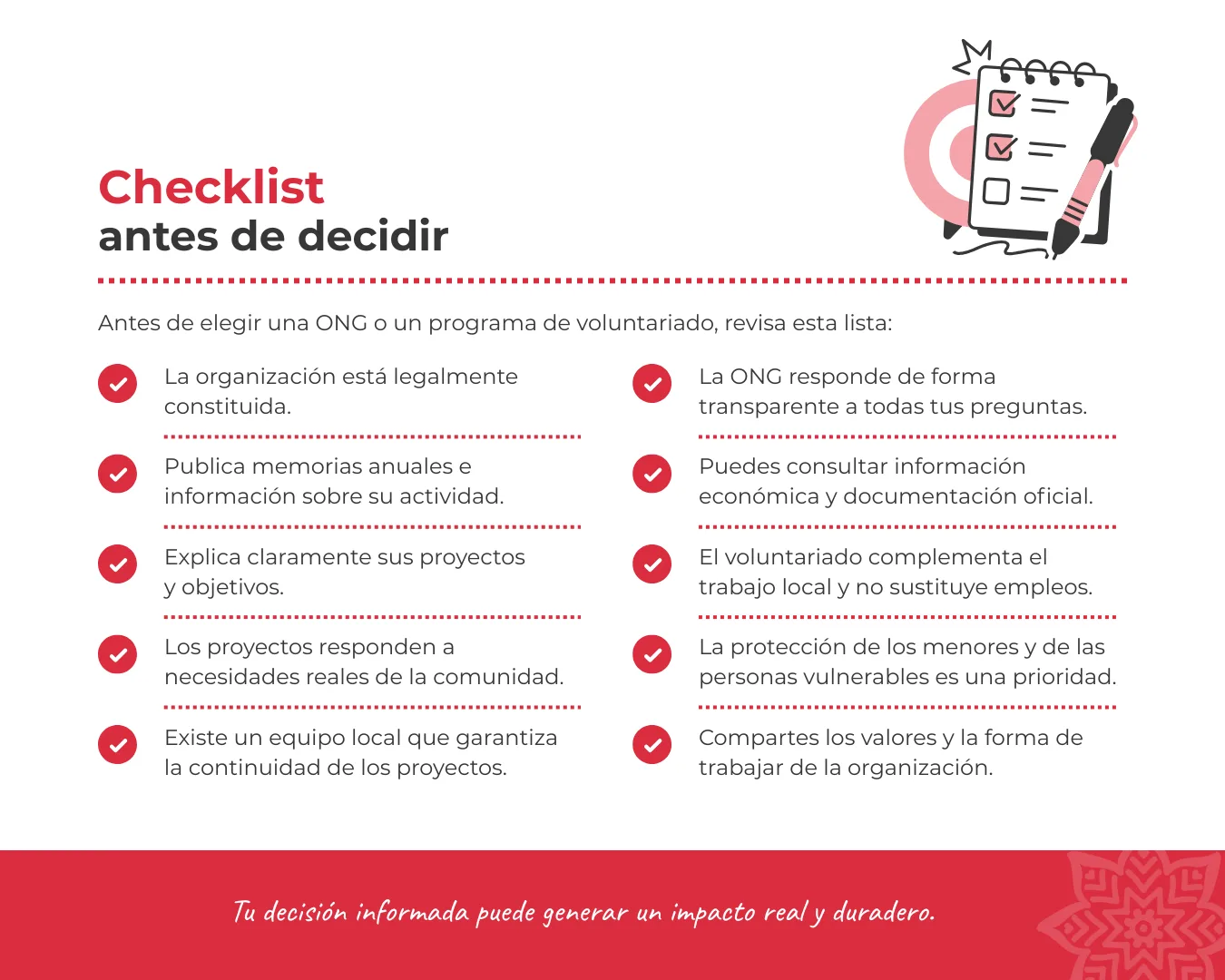
Before choosing an NGO or a volunteer program, review this list:
- The organization is legally constituted.
- It publishes annual reports and information about its activity.
- It clearly explains its projects and goals.
- The projects respond to real needs of the community.
- There is a local team that guarantees the continuity of the projects.
- The NGO answers all your questions transparently.
- You can review financial information and official documentation.
- Volunteering complements local work and does not replace jobs.
- The protection of children and vulnerable people is a priority.
- You share the organization’s values and way of working.
Frequently asked questions
How can I tell if an NGO is trustworthy?
Check that it is legally constituted, publishes annual reports and financial information, explains its projects clearly and answers your questions transparently. Direct contact and an identifiable team are also good signs.
What is ethical volunteering?
It is volunteering that responds to real community needs, complements the work of local teams without replacing jobs, and puts the well-being of children and vulnerable people above the volunteer’s experience.
What questions should I ask before signing up for a volunteer program?
Ask what the project’s goal is, who leads it on the ground, how the organization is funded, what exactly you will do and how the impact is measured. A serious NGO will answer all of them transparently.
Are donations to the CiENViDAS Foundation tax-deductible?
Yes. As an accredited NGDO registered in the Andalusian Register of Foundations, donations and child sponsorships may qualify for the tax deductions provided for in the Spanish Personal Income Tax (IRPF).
Where can I consult the official documentation of CiENViDAS?
On our website we publish our registration in the Andalusian Register of Foundations, the annual activity report, the official approval of our accounts and detailed information about our projects. You can also request any documentation directly from us.
Choosing a trustworthy NGO is the first step towards making your commitment have a positive and lasting impact. Ethical volunteering is not just about helping for a while, but about being part of projects that respect people, strengthen communities and create real opportunities for the future.
At the CiENViDAS Foundation we work every day with that commitment: promoting sustainable cooperation projects, especially aimed at improving the lives of girls and boys in vulnerable situations, and offering responsible, transparent volunteer programs focused on the needs of local communities.
Because truly helping starts with choosing well who to help with.