More and more people choose to support charitable causes. Whether through a one-off donation, becoming a member of an NGO or sponsoring a girl, social commitment keeps growing year after year.
Millions of people support social organizations on a regular basis, especially in projects related to childhood, education and international cooperation. Contributions to NGOs not only create a real impact on the lives of those who need it most, they also allow organizations to sustain long-term programs and act where help is most urgent.
Still, many people have questions before taking the step:
- What’s the difference between donating and sponsoring?
- Is becoming a member better?
- Which type of help has the greatest impact?
- Do all contributions offer the same tax benefits?
In this article we explain the main differences between sponsoring, donating and becoming a member of an NGO, to help you choose the form of support that best fits you and the impact you want to make.
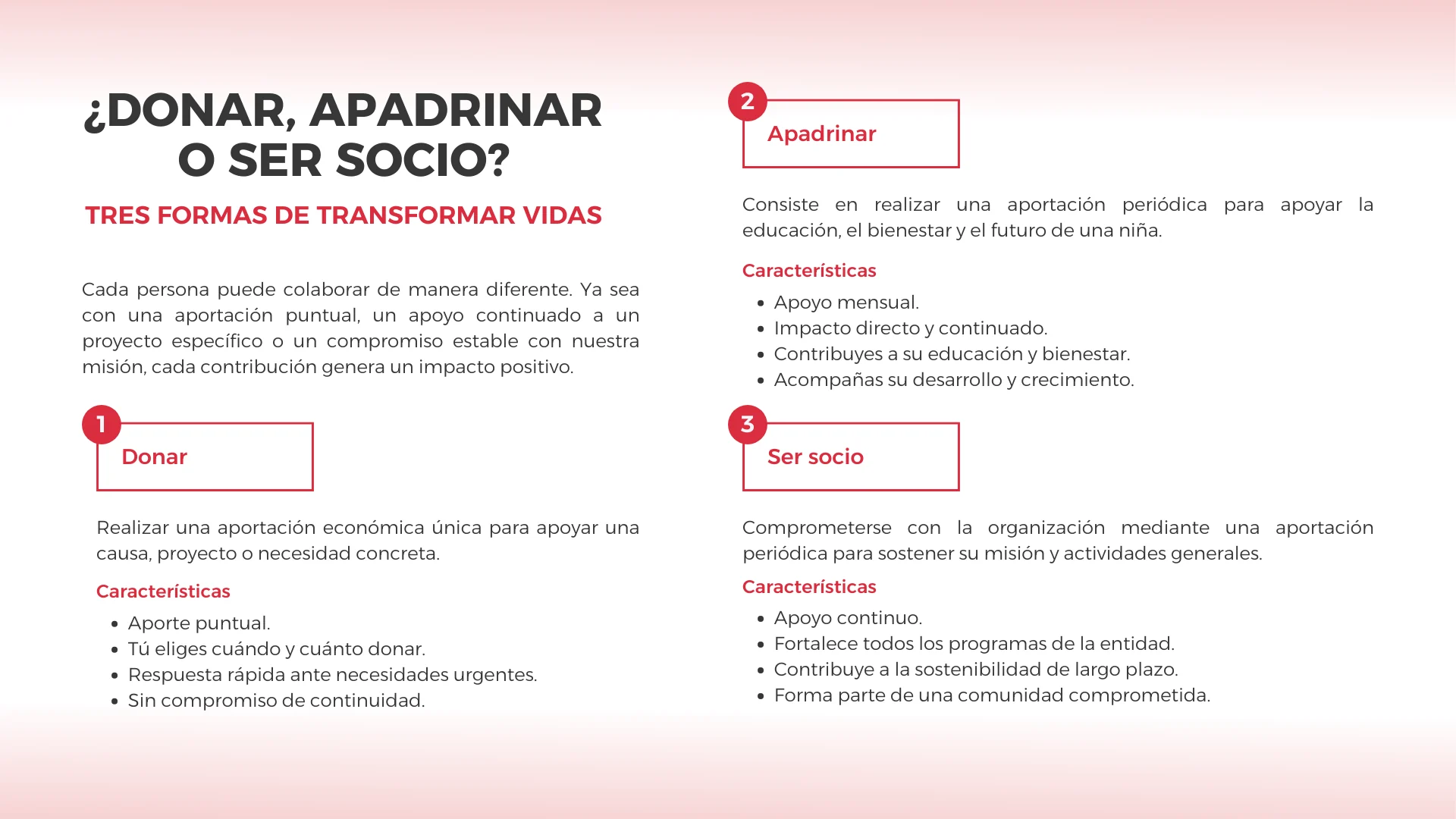
The 3 main ways to help
There are different ways to support a foundation or social organization, but the most common are:
1. Sponsorship
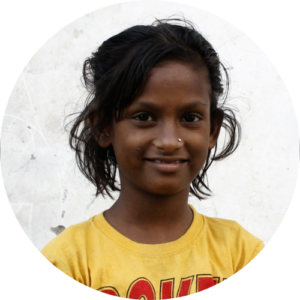
Sponsorship is a form of support in which a person regularly backs a girl. It usually involves a monthly contribution and lets you build a closer bond with the cause you support, receiving updates on her progress and the impact of your help.
At the CiENViDAS Foundation, this commitment becomes a more human, transparent and personal experience: from the very first moment you’ll know the name, story and reality of the girl you support, strengthening your connection to her development and wellbeing. You can see the girls waiting for support on our sponsorship page.
Your contribution goes directly to improving her wellbeing, education, food and medical care, letting you see how your help creates opportunities and changes lives in a tangible way.
Unlike other more general models, at CiENViDAS sponsorship puts a face and a story to every contribution, building an authentic bond between sponsor and beneficiary.
2. Donation
A donation is a financial or material contribution that a person or entity makes voluntarily to support a cause, organization or social project. It can be one-off or recurring and does not necessarily imply an ongoing commitment.
Donations are occasional financial contributions that help respond to specific needs.
Many people choose to donate at certain moments: charity campaigns, the holidays or specific fundraising drives. If you’d like to make a one-off contribution, you can write to us from the CiENViDAS contact page.
This kind of support is essential for covering immediate needs, although it doesn’t always guarantee long-term stability for social projects.
3. Becoming a member
Becoming a CiENViDAS member means supporting the project consistently.
Regular contributions make it possible to plan food, schooling, medical care and daily care for the girls. Thanks to a monthly or recurring fee, the Foundation can sustain everyday needs without relying solely on one-off campaigns or extraordinary donations.
For many NGOs, members are the backbone that makes it possible to keep educational, healthcare and child-protection programs running in a stable, sustainable way.
What sponsorship is and what it involves
Sponsoring means making an ongoing commitment to the wellbeing and development of a girl.
At CiENViDAS, sponsorship takes a close, transparent and human approach.
You choose who to sponsor
You can choose the girl you want to sponsor. From the very first moment you’ll know her name, her story and her personal situation.
This lets you build a much more real and meaningful bond with the help you’re offering.
Real help, no fine print
Your contribution goes directly to covering essential needs such as:
- Schooling.
- Food.
- Medical care.
- School supplies.
- Basic daily care.
The help reaches the sponsored girl in India directly, with no diversion to purposes outside the project.
A personal, real connection
Sponsorship isn’t only financial help.
You’ll receive updates on her progress. You’ll also be able to write her letters and, if you wish, even travel to meet her in person in her country.
This closeness makes sponsorship a deeply transformative experience for both the person who helps and the person who receives the help.
One-off donations: pros and limits
One-off donations are a quick, flexible way to support an NGO.
Advantages of donating
- You can give whatever amount you wish.
- There’s no ongoing commitment.
- It lets you help with urgent campaigns or emergencies.
- It’s ideal for people who want to help occasionally.
Donations are essential for driving specific projects, responding to humanitarian crises or funding extraordinary needs.
Limits of one-off donations
Although they’re very important, isolated donations have one main limitation: a lack of continuity.
NGOs need financial stability to plan educational programs, daily meals, medical care or the upkeep of children’s homes.
When income depends solely on occasional campaigns, it’s harder to guarantee sustained help over time.
Becoming a member of an NGO
Being a member means making a regular contribution —monthly, quarterly or annually— to support the organization steadily.
Advantages of being a member
- You help sustain long-term projects.
- You make the NGO’s financial planning easier.
- Your support brings stability and continuity.
- You take an active part in the growth of the social project.
In the case of CiENViDAS, regular fees help guarantee:
- Daily food.
- Education.
- Healthcare.
- Protection and care of the girls.
- The ongoing operation of the homes and social programs.
Is there a lock-in?
Usually not. You can change or cancel your support whenever you need to.
That’s why becoming a member is one of the most accessible and sustainable ways to support a social cause regularly.
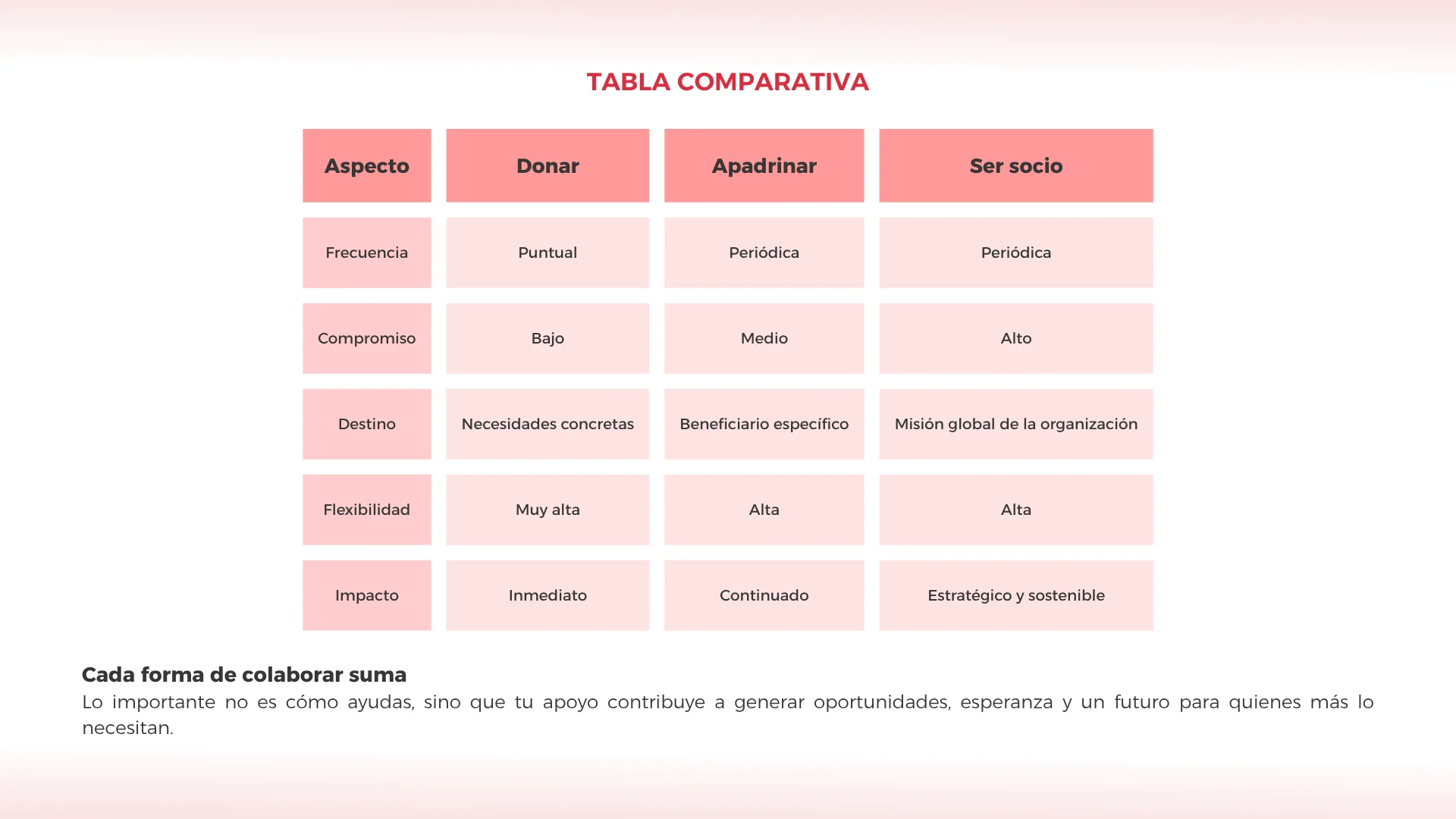
Comparison: summary table
Tax relief in each case (Spain)
Donations, membership fees and sponsorship contributions can all benefit from tax relief in Spain, as long as the NGO is covered by the Spanish Patronage Law (Ley de Mecenazgo).
How much does a donation deduct?
Currently, individuals can deduct:
- 80% of the first €250 donated.
- 40% on the amount above that first €250.
- 45% on the excess if you donate to the same organization on an ongoing basis and meet the recurrence requirements set out in the Patronage Law.
A practical example
If you donate €250 a year:
- The tax authority will refund you roughly €200 on your tax return.
- The real cost of your help will be much lower than the amount contributed.
Tax-relief details (AEAT)
The Spanish Tax Agency provides tax benefits for contributions made to foundations and NGOs covered by the non-profit tax regime.
This applies to:
- One-off donations.
- Membership fees.
- Regular sponsorship contributions.
It’s important to keep the donation certificate issued by the Foundation so you can correctly apply the deduction on your tax return.
Which option is best for you?
There’s no single right way to help.
The best option will depend on:
- Your financial capacity.
- How involved you want to be.
- How regularly you want to contribute.
- The kind of impact you’d like to make.
If you’re looking for closeness and a personal connection
Sponsorship may be the ideal option. It lets you directly know the story of the girl you help and follow her progress over time.
If you prefer to help occasionally
One-off donations are perfect for supporting specific campaigns or helping whenever you can.
If you want to create stability and continuity
Becoming a member is one of the most effective ways to sustain social projects over the long term and guarantee steady help.
In any case, every bit of help counts. Each contribution, large or small, helps transform lives and offer real opportunities to girls who need support to build a better future.
Before you choose, it’s essential to make sure the organization is transparent. Find out how to choose a trustworthy international cooperation NGO and what signs to look for.
If you already know how you’d like to help, you can sponsor a girl, become a member or contact the Foundation to make a one-off donation.