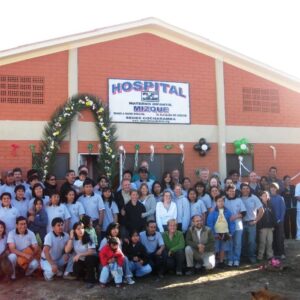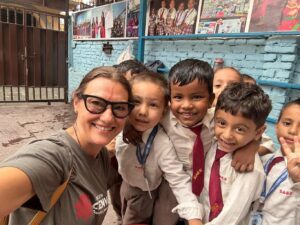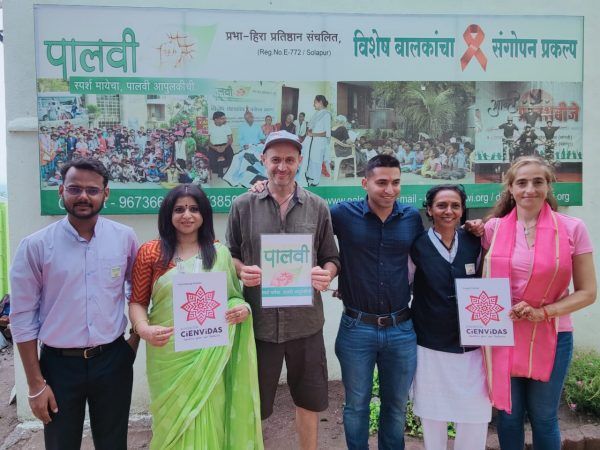
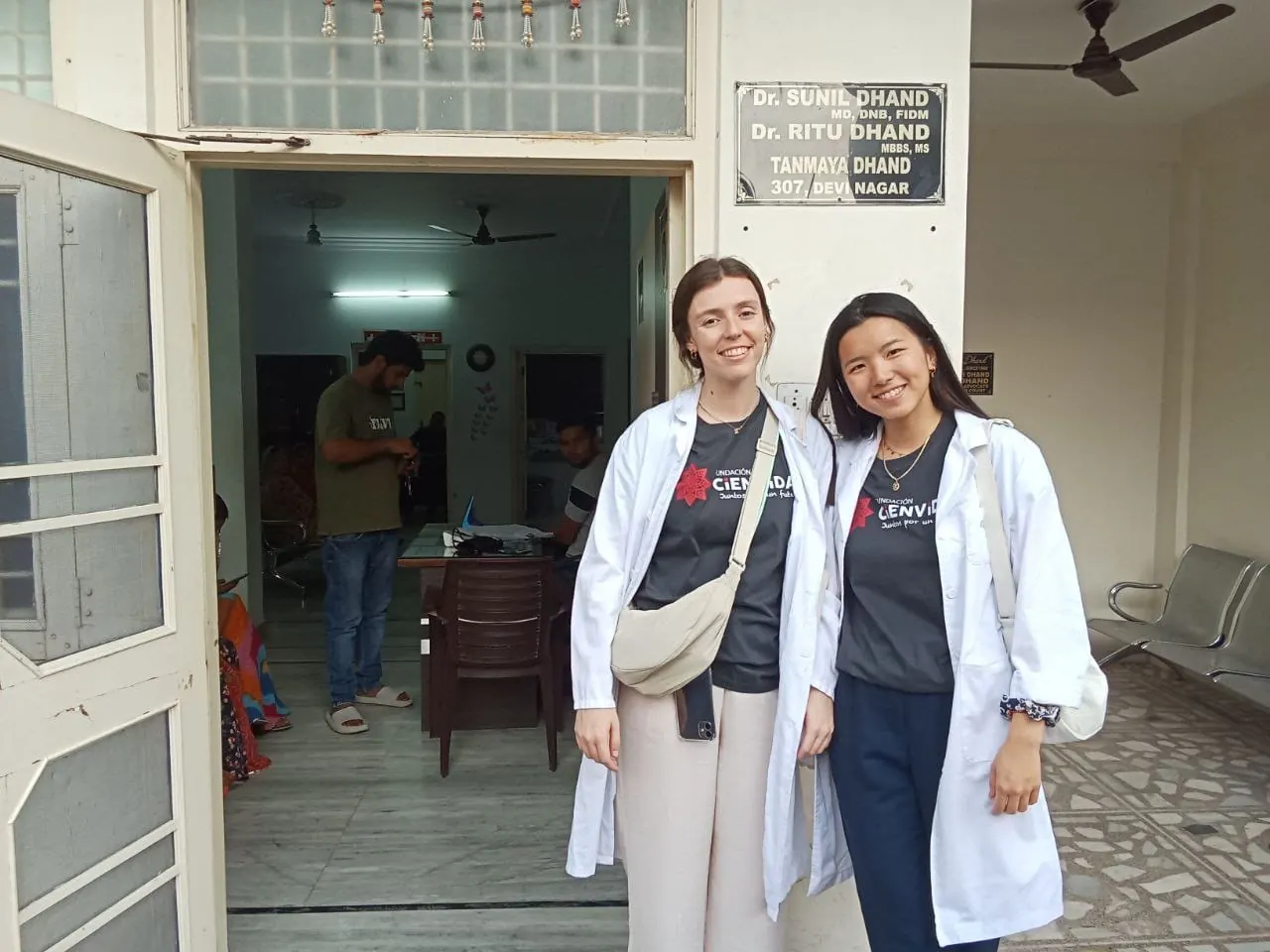
Photo from the CiENViDAS library: volunteers on the health project in Jaipur, India.
If you study or work in health care and are thinking about medical volunteering abroad, the first question is: what can you actually contribute with your training? Choosing a country comes second. A suitable program should match your skills, explain who coordinates the work and set clear limits to protect patients.
In this guide you will find criteria to compare options in India and Bolivia, prepare your application and tell an observation experience apart from hands-on clinical work. That way you can send a specific inquiry before booking your trip.
What is medical volunteering abroad?
It is a temporary collaboration on a health-related project, organized together with a local team. It may include health education, organizational support, observation or professional assistance, depending on the program and the authorization that applies. These types of involvement are not interchangeable.
Taking part in a health care setting does not turn every task into authorized clinical practice. Nor should it replace jobs held by local staff. The project needs continuity once your stay ends: ask how your contribution will fit into the work that already exists.
Which profiles can take part?
Medicine, nursing and other health professions
For example, the CiENViDAS program page for La Paz asks for a health care qualification or for students in the final years of Medicine or Nursing. Admission must be assessed program by program, and that requirement alone does not authorize you to perform clinical procedures.
An experienced professional and a student who is just starting out need different proposals. To assess the fit, describe your degree or year of study, specific experience, languages and availability. If you trained in another health discipline, explain your skills as well; do not assume every specialty is accepted.
If you are a student, ask for a written distinction between observation and the tasks you could perform under supervision. If you are looking for academic credit, check with your school first: taking part in a volunteer program or receiving a certificate does not guarantee academic recognition.
If you have no health care training, ask about non-clinical roles or explore other international volunteer programs. Choosing an activity that matches what you know how to do is a way of caring for the people you will work with.
What can and can’t a volunteer do?
It helps to distinguish three situations before accepting a proposal:
- Observing the team’s work, respecting authorizations and patient privacy.
- Supporting educational or organizational activities defined by those in charge, with enough preparation.
- Taking part in clinical procedures only when you hold the license, authorization and supervision required for that role and that destination.
Do not assume you can diagnose, prescribe or perform procedures because someone invites you to try. If a task goes beyond your competence, or you do not know who is responsible for it, stop and ask the person in charge. A project’s needs do not remove professional limits.
Confidentiality is part of the work too: do not share medical records, photos or details that could identify patients. Ask about the facility’s rules even if you are only observing. The World Medical Association stresses protecting patients and communities, scope of practice and supervision during international clinical placements.
CiENViDAS destinations in India and Bolivia
Within volunteering in India, you can review the program page for medicine and health in Jaipur. It describes a project linked to local health centers and awareness activities. Use it as a starting point to request specific tasks based on your profile, not as permission to carry out every activity mentioned.
The catalog also includes medicine and health in Varanasi. When comparing both options, ask about the host facility, the working language and the person who will supervise your activity. Sharing a country does not mean sharing conditions.
For volunteering in Bolivia, review the medicine and health program in La Paz. The Cochabamba volunteering guide will help you get to know the country and broaden your questions about the stay. Availability and admission must be confirmed for your dates.
Requirements, documents and supervision
Prepare a short résumé that explains what you can do, not just where you studied. Add your possible dates and any requirements from your university or employer. Then ask for a personalized list of documents: degrees, licenses, certificates or authorizations, depending on the activity.
Before you commit, ask for answers to these questions:
- Who accepts my profile and who directs my daily work?
- Which tasks are allowed and which are excluded?
- How is an incident or a question handled during the activity?
- What insurance do I need, and what coverage does the planned work require?
- What does the proposal include, and which costs do I cover separately?
Also check the entry requirements that apply to your nationality and activity. To prepare your health before the trip, see a travel medicine provider well in advance; you can start with the CDC Travelers’ Health pages in the United States or the Government of Canada travel health advice. A volunteer program page is no substitute for an individual assessment.
How to choose a responsible program
A good proposal lets you understand what the host team needs and what commitment you are taking on. Be wary of offers that present clinical procedures as a chance to gain experience without explaining the conditions. Patient safety must outweigh how good something looks on a résumé.
If you need a broader checklist to assess the organization, read how to choose ethical volunteering and a trustworthy NGO. Pay special attention to project continuity, transparency and the role of local staff.
How to request information
Send your profile, experience, languages, dates and goal: professional collaboration, observation or a proposal your school can review. State your limits too. Knowing what you cannot do helps find the right fit.
Ask which health program fits your profile. Before booking, request confirmation of admission, your role and the full conditions of the stay.