India hits you like a giant hammer the moment you step out of Indira Gandhi airport. The air is white. You can barely make out the city’s skyline. Not without trouble (this is India), I manage to grab a tiny taxi that weaves through the wild, chaotic traffic like a race car. We dodge cows and people crossing the eight lanes with the same indifference. And with the word “miracle” in my head, we reach V-20 street — unpaved and crisscrossed by thousands of cables hanging between colorful but crumbling façades. “Casa Basora” reads the little sign; the volunteer house, where Ms. Gayatri, a middle-aged woman who must once have been very beautiful, opens the gate with a smile.
After a spicy, tasty breakfast that pushes my stomach further than I thought it could go, I decide to take a walk around the area to the Mall, which —the woman insisted— must be a tourist attraction. I walk between houses that somehow stay standing without quite knowing how. Curious looks. A pale Westerner in a cap wandering through the neighborhood is something you don’t see every day. And suddenly, without realizing it, I find myself among shacks built from old sheets of metal tied with rope, ragged children playing in the reddish dirt, and girls in colorful kurtis washing clothes in a grayish pond… Everyone watches me as I pass, and they smile at me. I’m not afraid. And yet for ten minutes I’ve walked through more poverty than I’ve seen in my whole life.
I come out of the sea of metal sheets onto the paved road and reach the shopping mall —after passing four security checks. Every well-known brand, even the most expensive and exclusive, gleams in the windows. Another ten minutes of walking, this time just to cover one floor of the opulent monster. And all of it next to a luxurious golf course, separated from the underworld by a narrow strip of fenced land, a no-man’s-land, like the space between two different planets. This is the reality of India today: boundless abundance next to colorful kurtis standing out among rusty metal, kurtis on the bodies of girls washing clothes in dark water, who look at me with a smile so warm it shames me. That’s the image I burn into my memory.
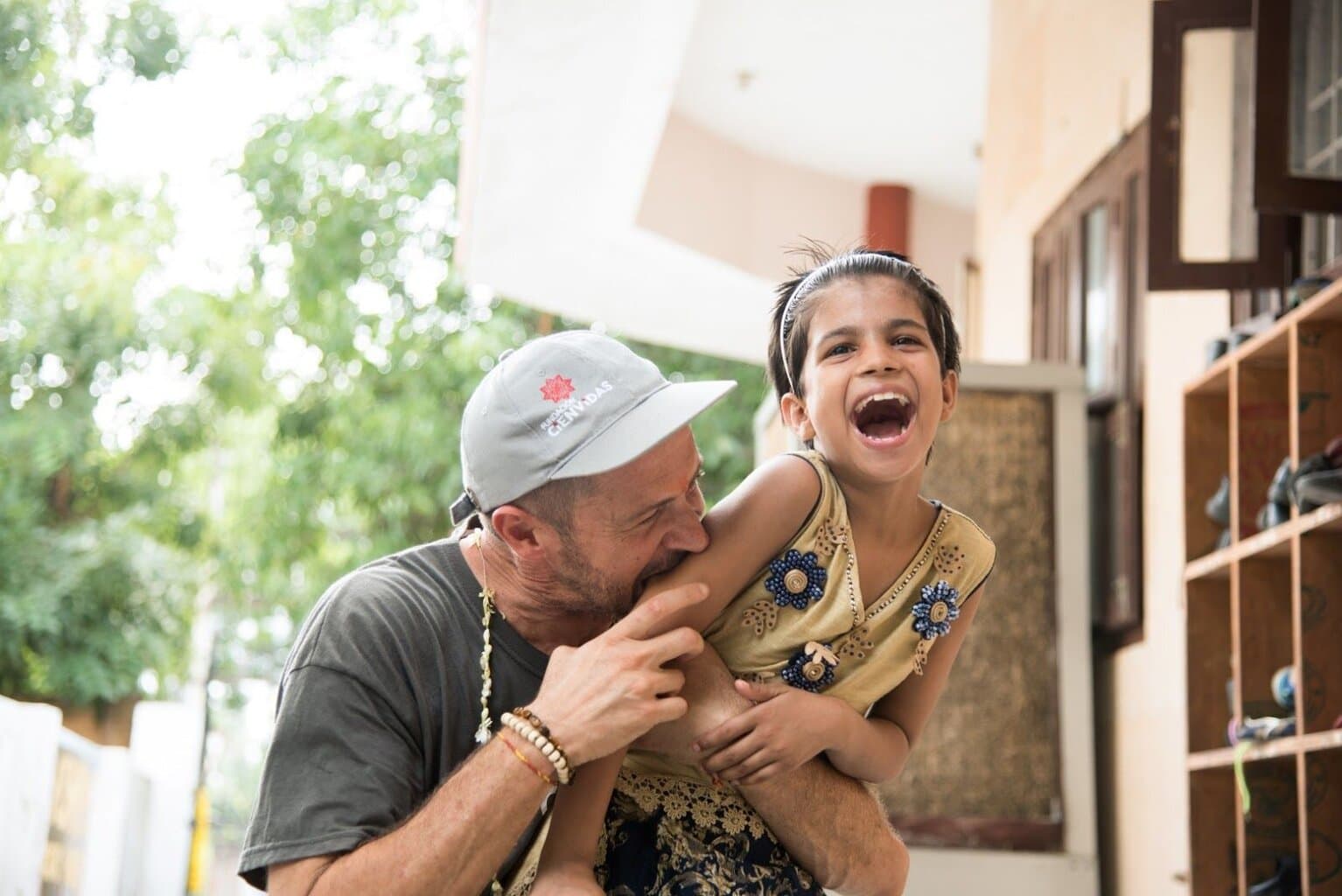
Two weeks later, my work as a volunteer at an orphanage in Jaipur done, I confirm what I’d begun to suspect on that twelfth of March: India is a powerful magnet, an amalgam of culture, tradition and religion with a pinch of abundance over an ocean of… of what? Scarcity? Poverty? Even misery?… But no; I can’t use any of those words, because the extraordinary thing about India is its people. People who, living in conditions any Westerner would call “poverty,” are simple, always kind, welcoming, always with that warm, close smile, always loving… more human? It’s astonishing.
I’d dare to say that here, somehow, they found the happiness our idolized Western civilization keeps searching for — perhaps down the wrong paths…
That is India.
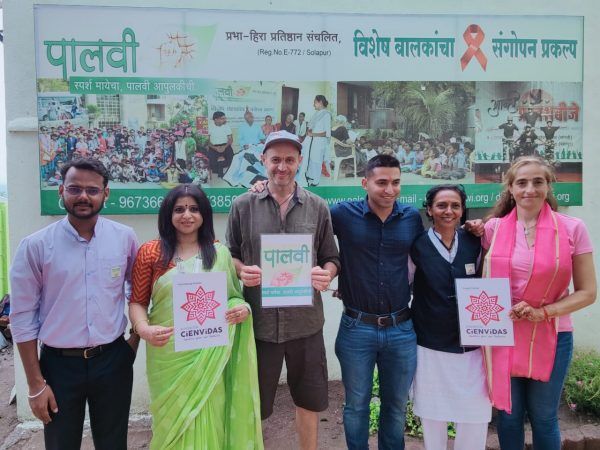
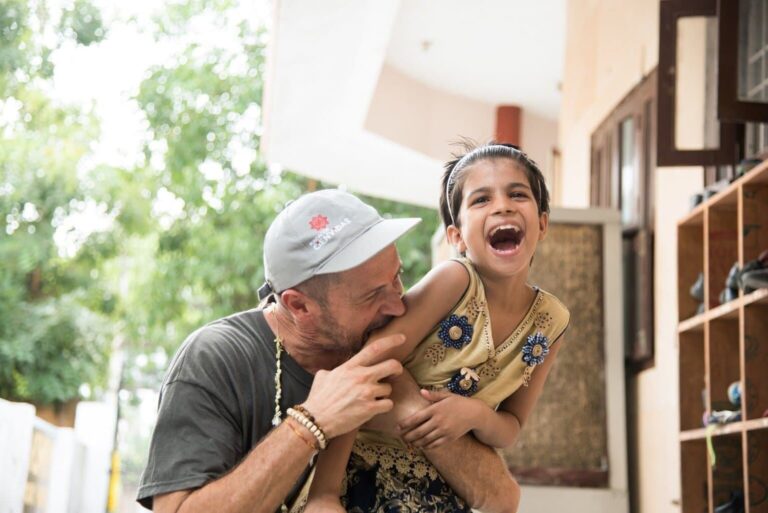
That volunteer, right after returning to Spain, founded the cooperation and development NGO CiENViDAS Foundation in April 2018.
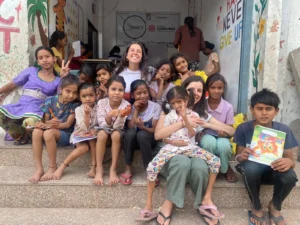
Today we’ve already reached thousands of beneficiaries, taken many girls off the streets and into school (I couldn’t say how many), met their basic needs and brought thousands of smiles. We’ve donated an ambulance van, carried out several international cooperation projects, expanded an orphanage from 25 to 50 girls, sent more than a hundred volunteers to India and Nepal, have many sponsored girls across 5 partner NGOs in India, started a university education program for the older girls with an online Spanish university, and so many other things…
We’re happy with the work done since then. The problem is… there’s still so much to do. We’ll keep going.
Help us keep fighting for them…