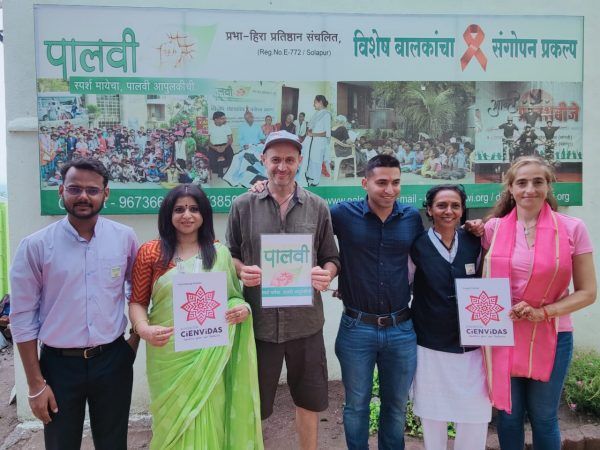
Peru is a country full of history, culture and unforgettable landscapes, but it is also a place where many children still face challenges linked to education, inequality and access to opportunities. Volunteering in Peru, especially in Cusco, is a way to discover one of South America’s most emblematic cities while supporting educational projects that create a positive impact in the local community.
At Fundación CiENViDAS, we believe that international volunteering should be a mutual learning experience. Cultural exchange, responsible collaboration and respect for local communities are at the heart of every program. If you are thinking about joining a volunteer program in Peru, this guide explains what you need to know before organising your trip.
Why choose Peru for volunteering?
Peru is one of the most enriching destinations for international volunteering. Although the country has grown significantly in recent decades, social inequalities remain visible, particularly in education and in communities with fewer economic resources.
In cities such as Cusco, many children come from families with limited access to after-school educational, sports or artistic activities. In this context, international volunteers provide valuable support by reinforcing learning, encouraging creativity and helping children develop confidence in themselves.
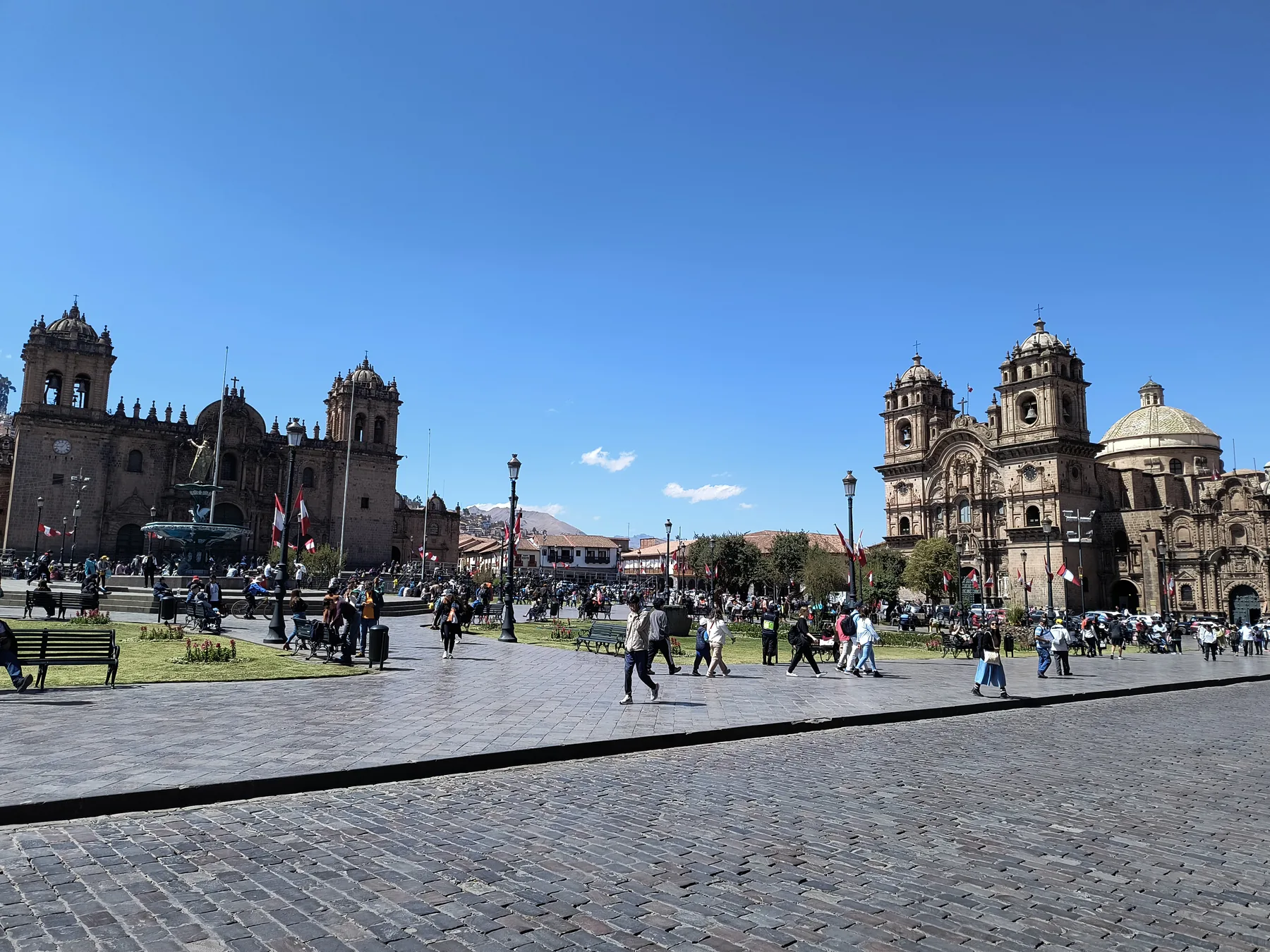
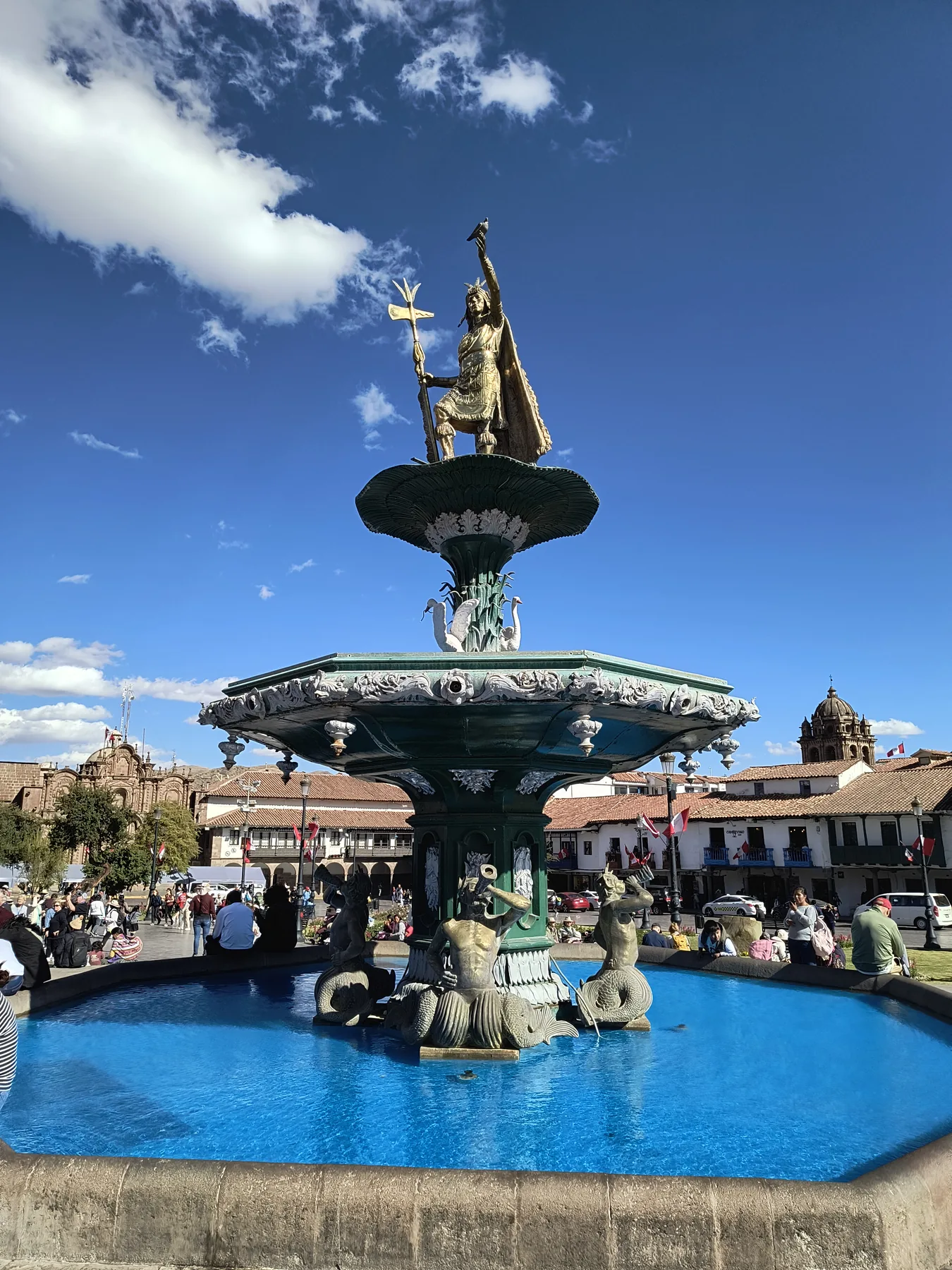
Beyond the social impact, Peru offers a powerful cultural experience. During your free time, you can explore places such as Machu Picchu, the Sacred Valley, the Plaza de Armas or the Rainbow Mountain, while learning about one of the oldest cultures in the Americas.
Volunteer programs available in Cusco
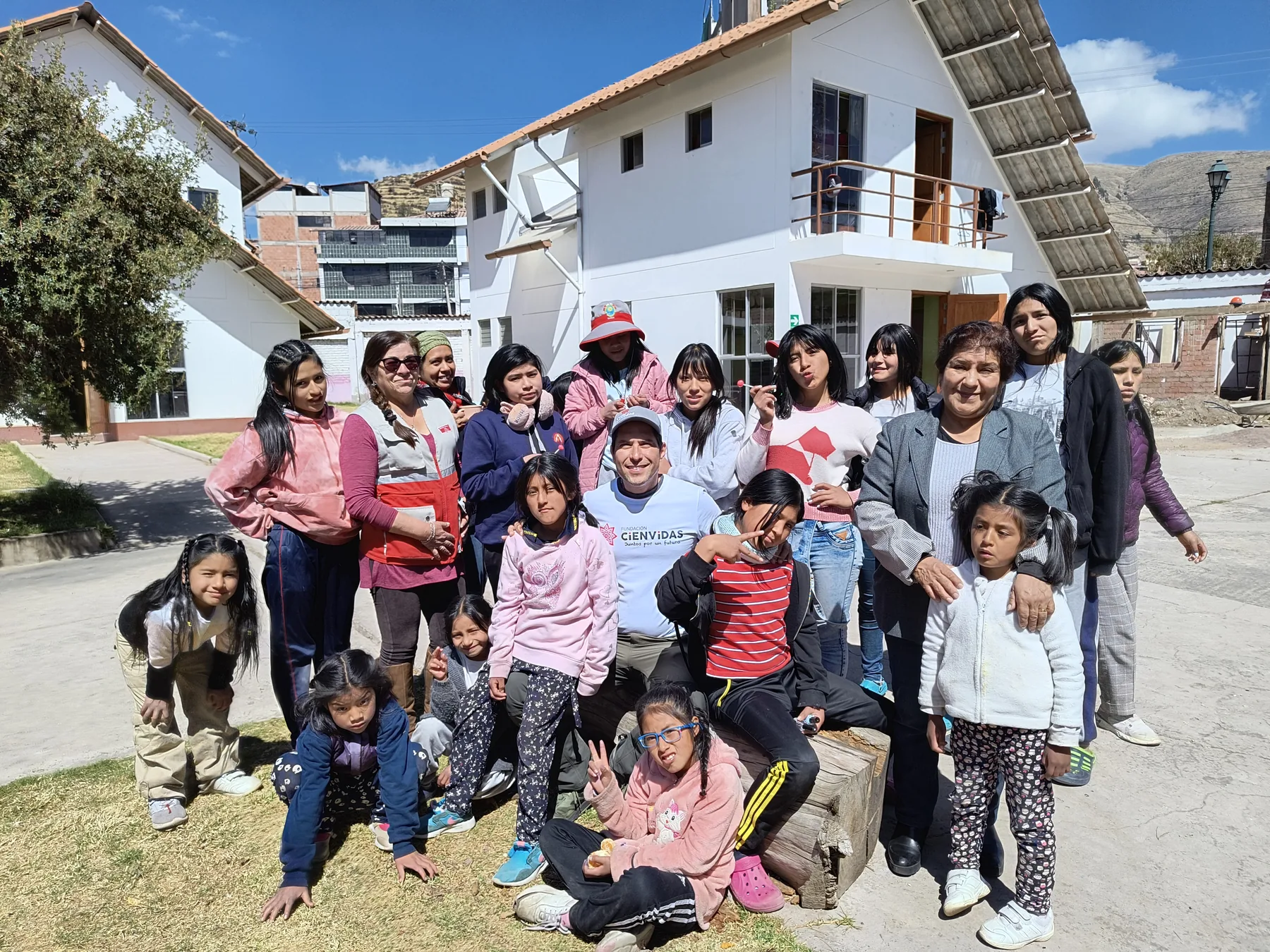
Fundación CiENViDAS works with educational projects where volunteers collaborate directly with children, young people and local teams. The programs are designed to complement the work of teachers and educators, never to replace them.
Teaching in public schools
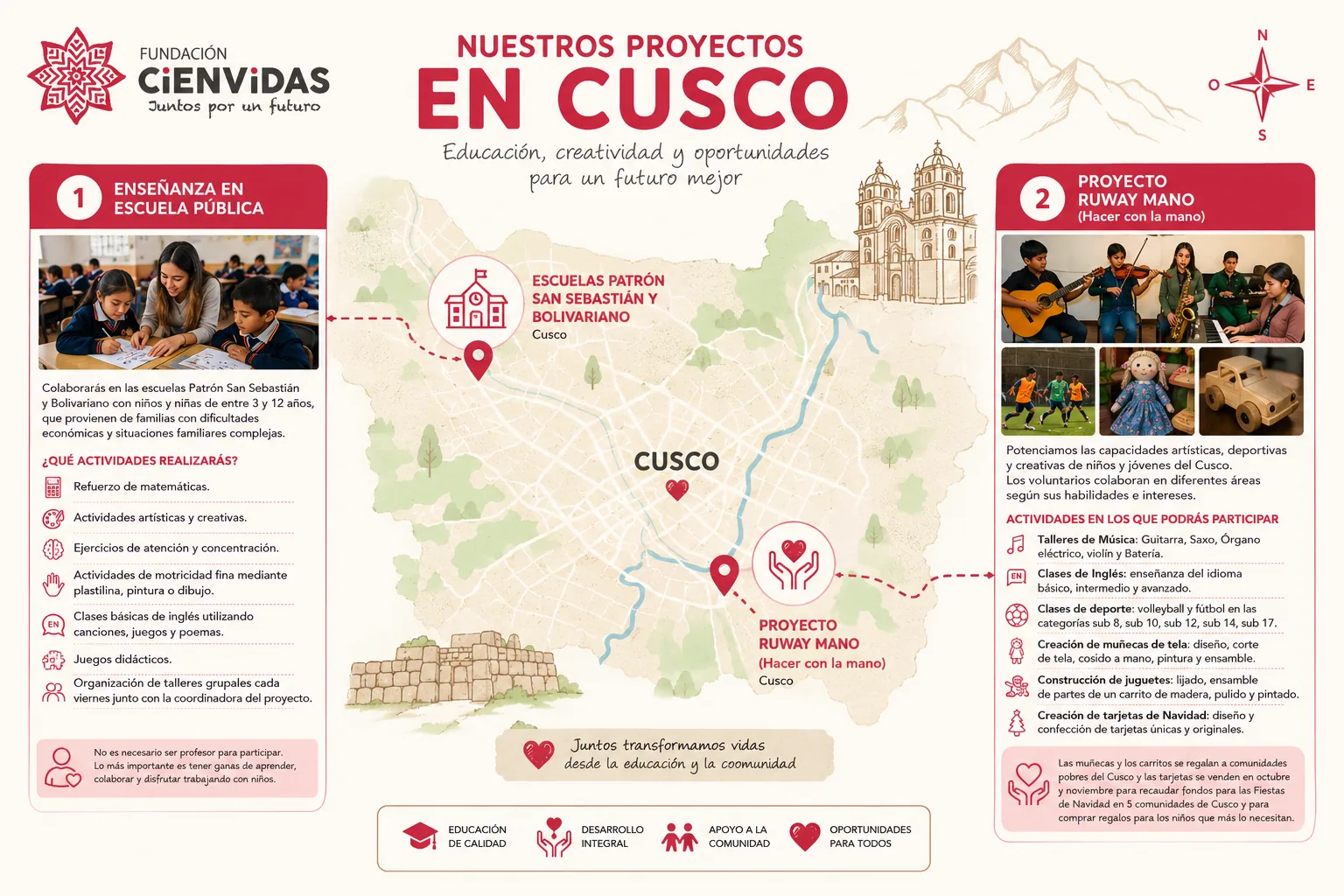
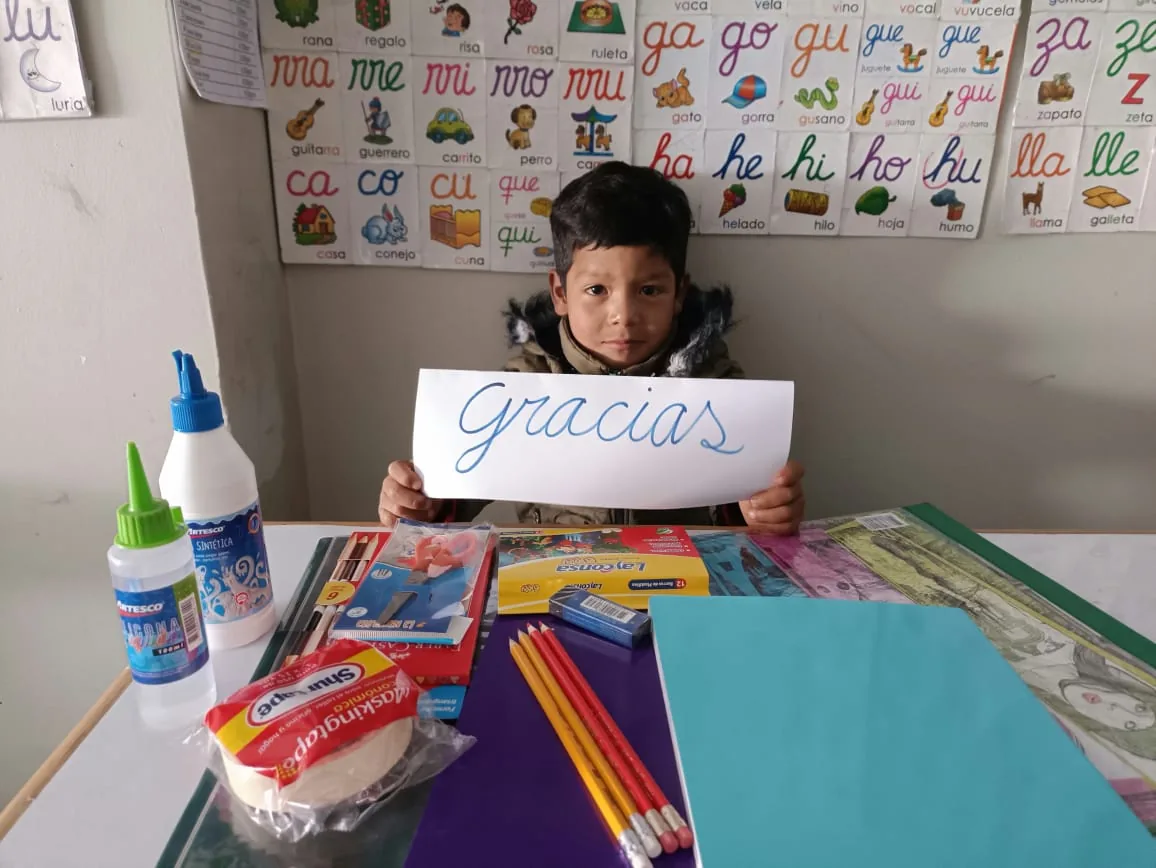
The teaching program in public schools takes place in schools such as Patrón San Sebastián and Bolivariano. Children are usually between 3 and 12 years old, and many come from families facing economic difficulties or complex family situations.
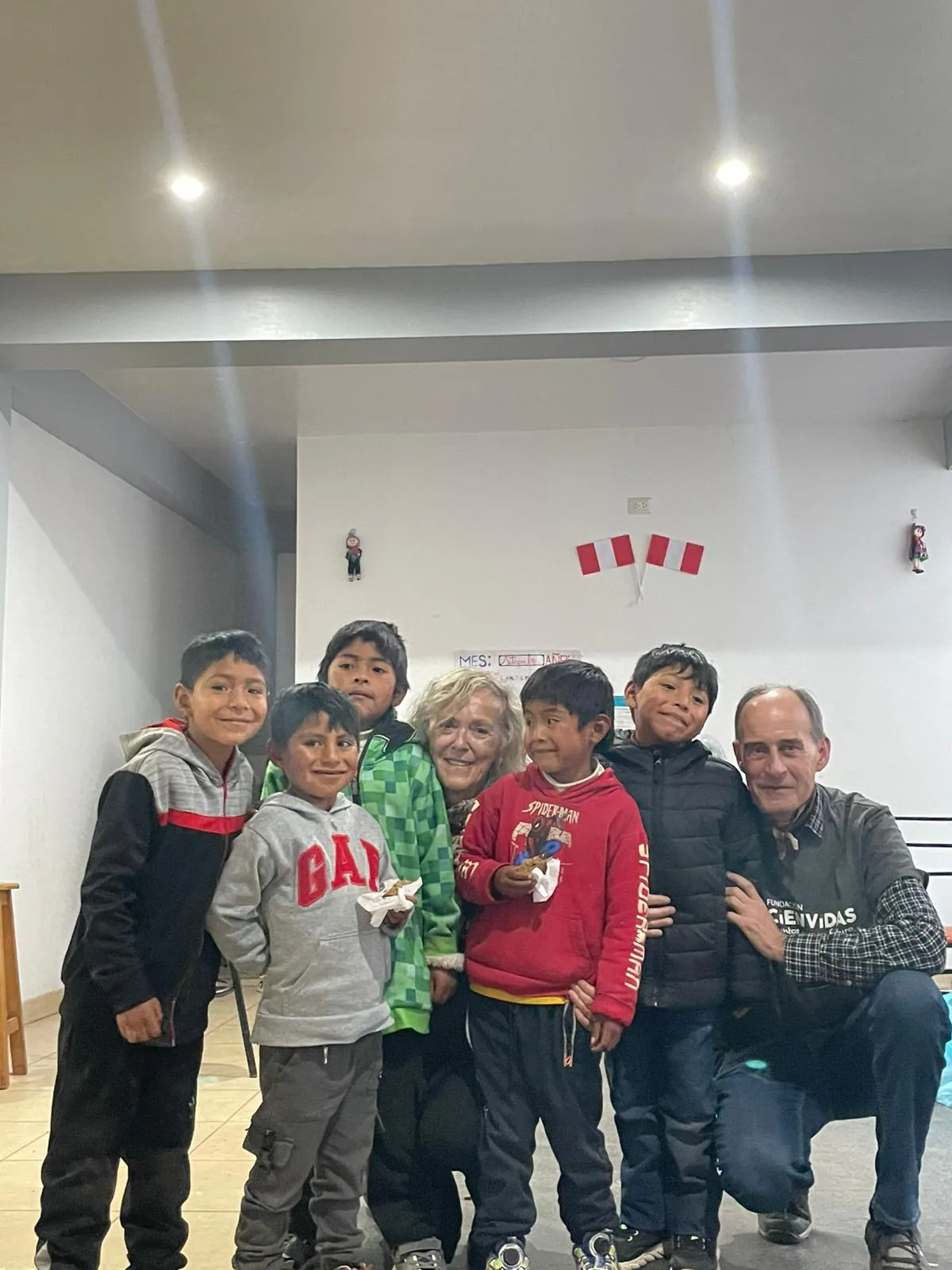
Volunteers support teachers through school reinforcement, creative activities, attention and concentration exercises, fine motor skills activities with clay, painting or drawing, basic English lessons using songs and games, and group workshops organised with the project coordinator.
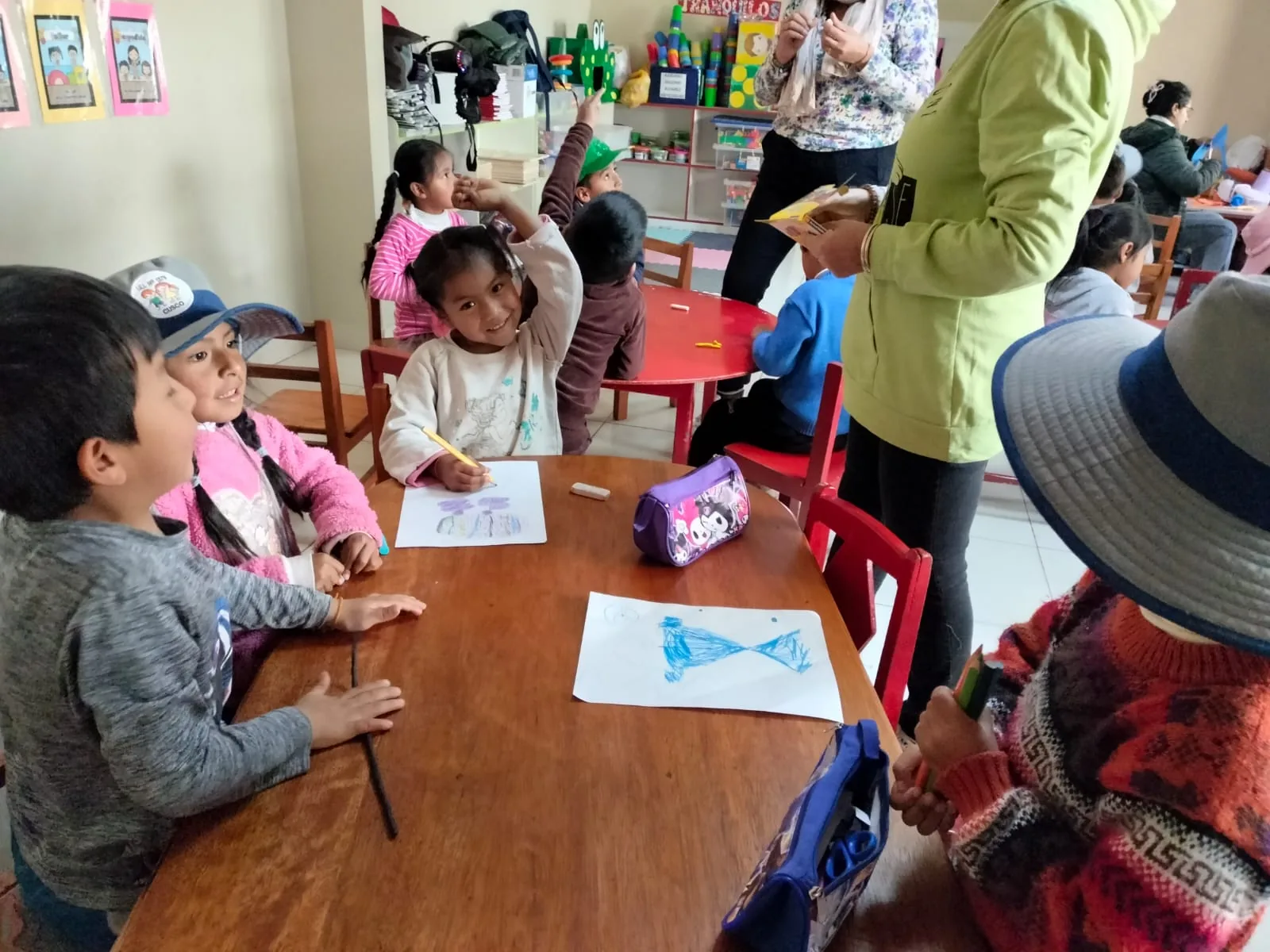
You do not need to be a qualified teacher to participate. The most important qualities are willingness to learn, patience, responsibility and genuine motivation to work with children.
Ruway Mano: arts, music and sports
The Ruway Mano project, which means “making by hand”, promotes the artistic, sporting and creative abilities of children and young people in Cusco. Volunteers collaborate according to their skills and interests.
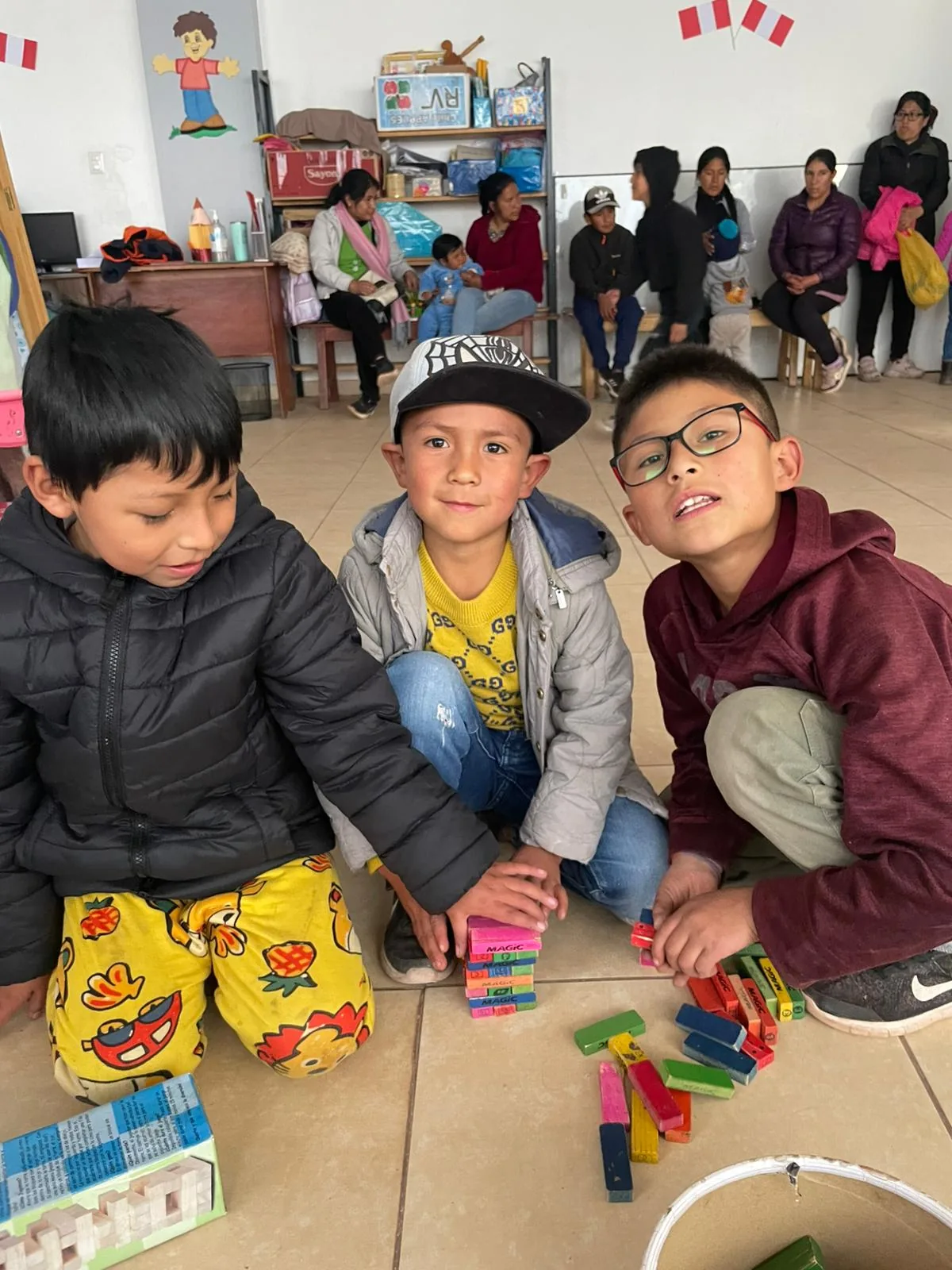
Activities may include music workshops, basic and intermediate English classes, volleyball and football, the creation of cloth dolls, wooden toy-making and Christmas card workshops. The dolls and wooden cars are donated to communities with fewer resources, while Christmas cards help raise funds for holiday activities and gifts for children in Cusco.
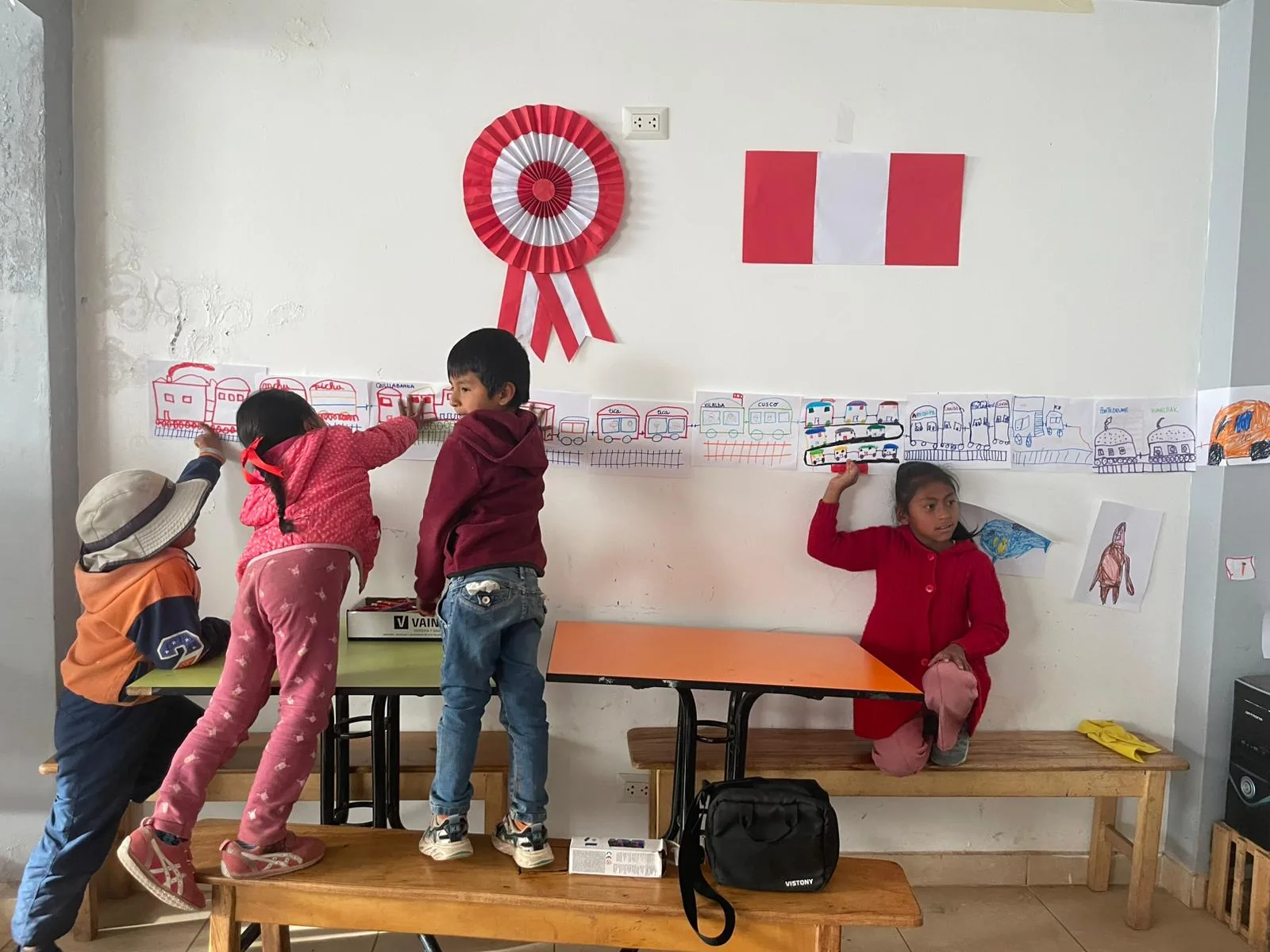
Teaching and working with children
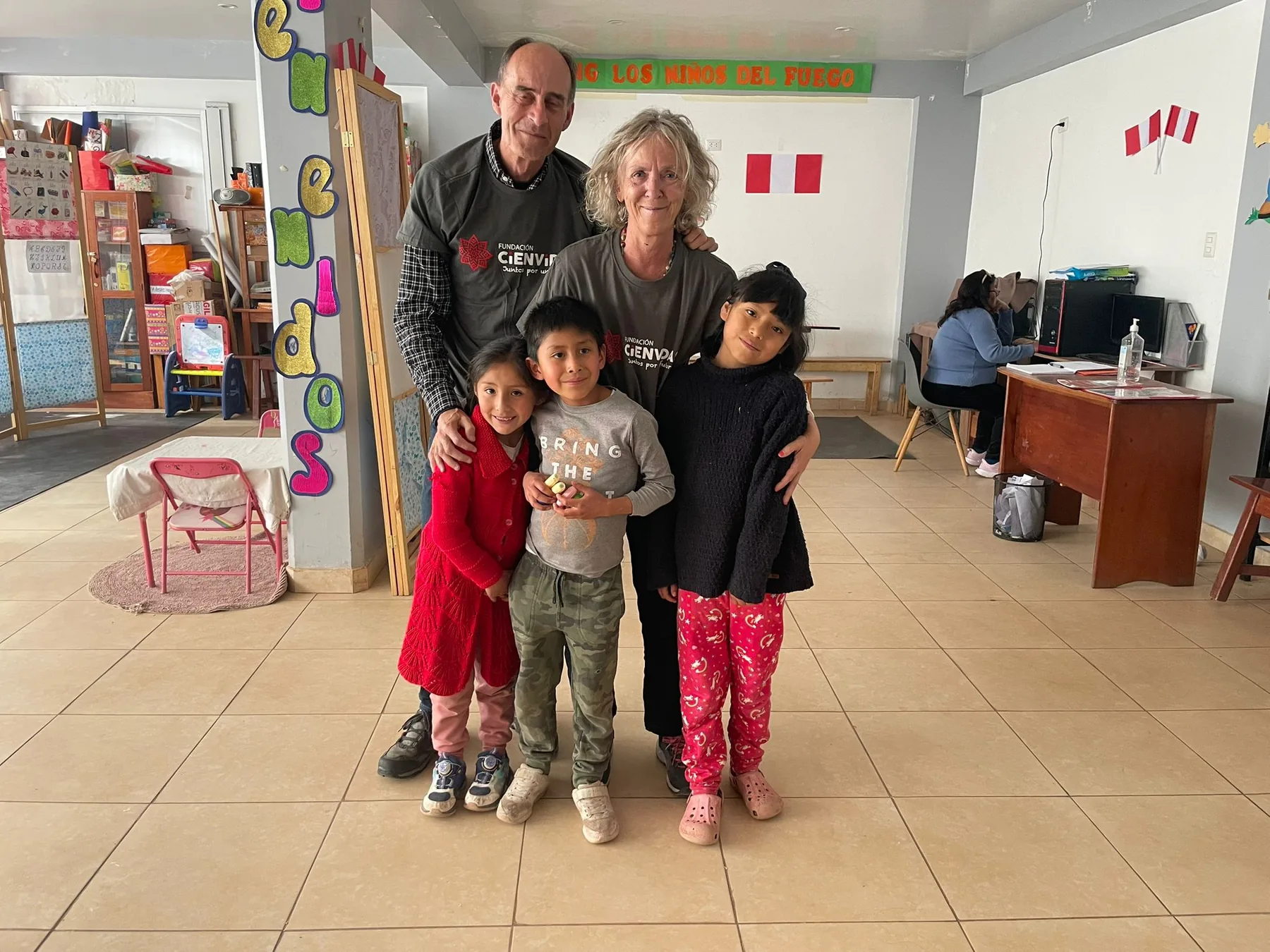
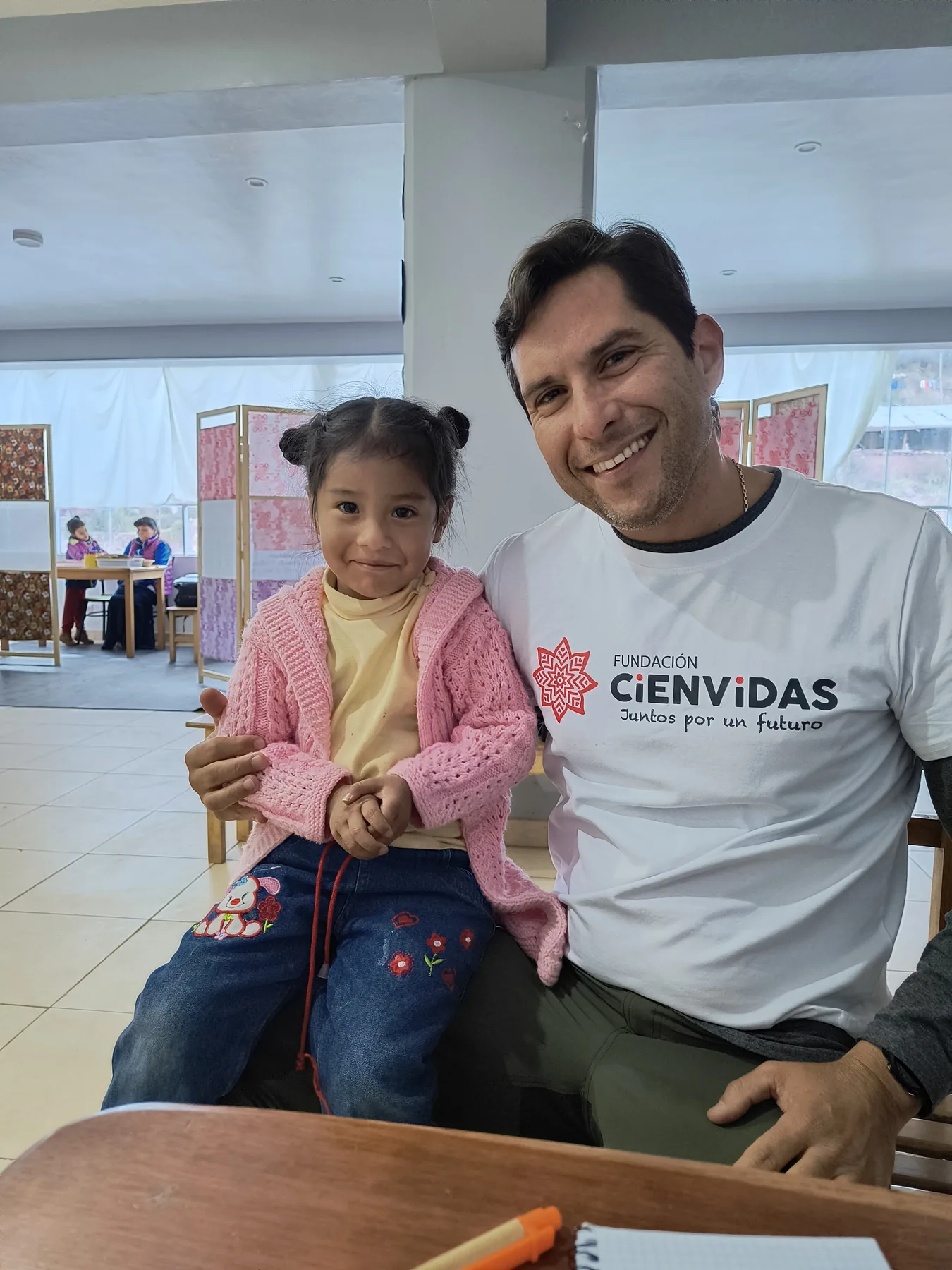
Our educational projects in Cusco are built around accompaniment and responsible support. Volunteers help create dynamic learning experiences that strengthen creativity, self-confidence, teamwork, English learning, sports practice and artistic expression.
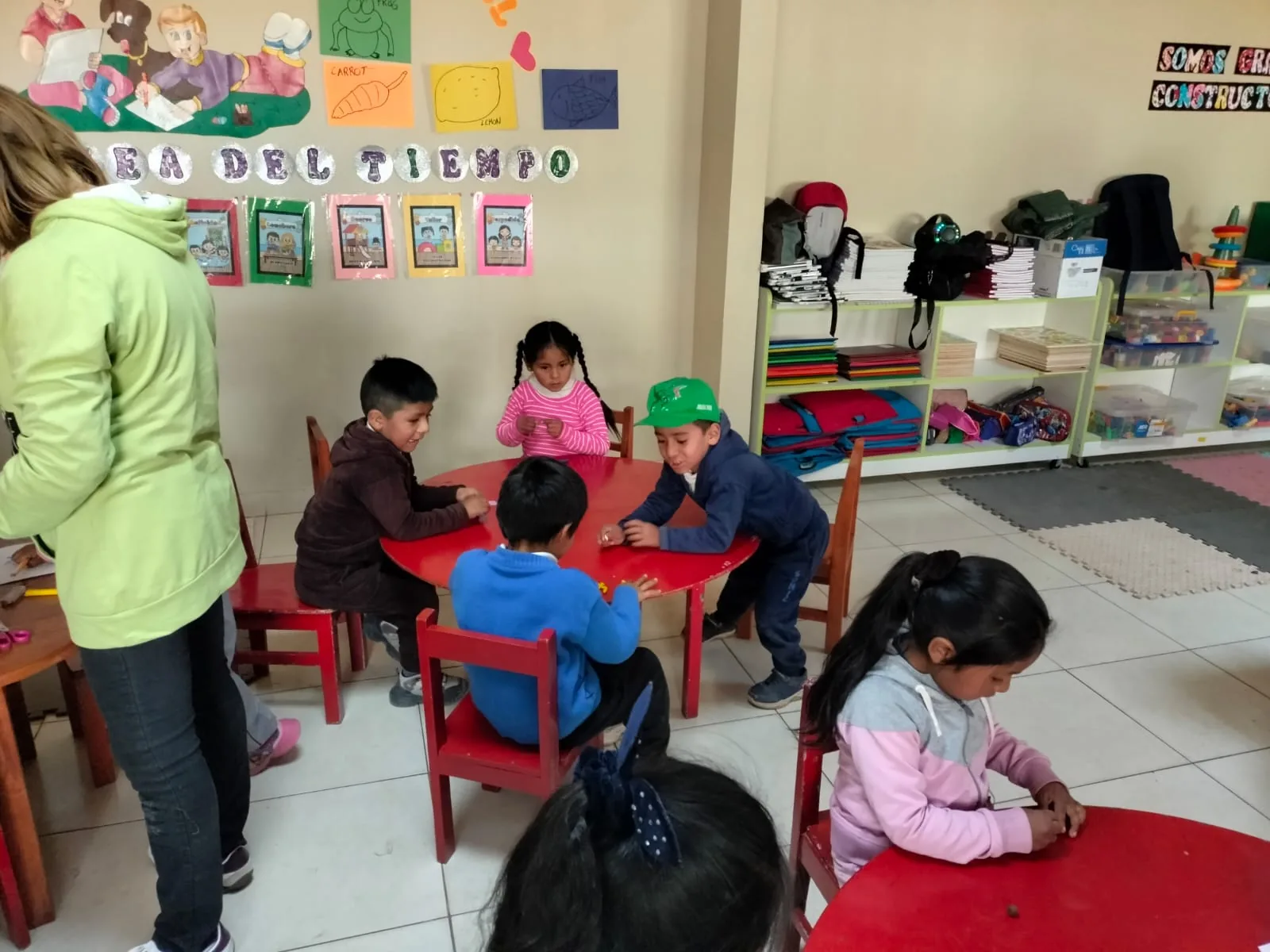
Volunteers also learn from the experience. They discover new ways of understanding education, adapt to another culture and develop personal skills such as empathy, communication and intercultural awareness. This is why choosing an ethical volunteering organisation is essential before travelling.
Requirements and visa for travelling to Peru
Joining a volunteer program in Peru is usually a simple process. Spanish citizens do not need a tourist visa for stays of less than 90 days, as long as the purpose of travel is tourism. A valid passport is required, and travellers must comply with the entry requirements set by Peruvian authorities.
Migration rules may change, so we always recommend checking the latest official information before travelling. If you are from another country, requirements will depend on your nationality, and you should consult the official list of countries that require a visa before booking your trip.
Budget and accommodation in Cusco
The minimum stay for our volunteer programs in Cusco is two weeks. The program is organised so that you can focus on the experience while Fundación CiENViDAS and the local team support the logistics.
The program includes personalised pick-up at Alejandro Velasco Astete International Airport in Cusco, transfer to the accommodation, orientation about the city and project, accommodation, daily transport to the project, three meals a day, local coordination and 24-hour support, administrative costs, airport transfer at the end of the program, a donation certificate and an international volunteering certificate.
Flights, medical and travel insurance, and a local SIM card are not included. A SIM card is highly recommended and usually inexpensive.
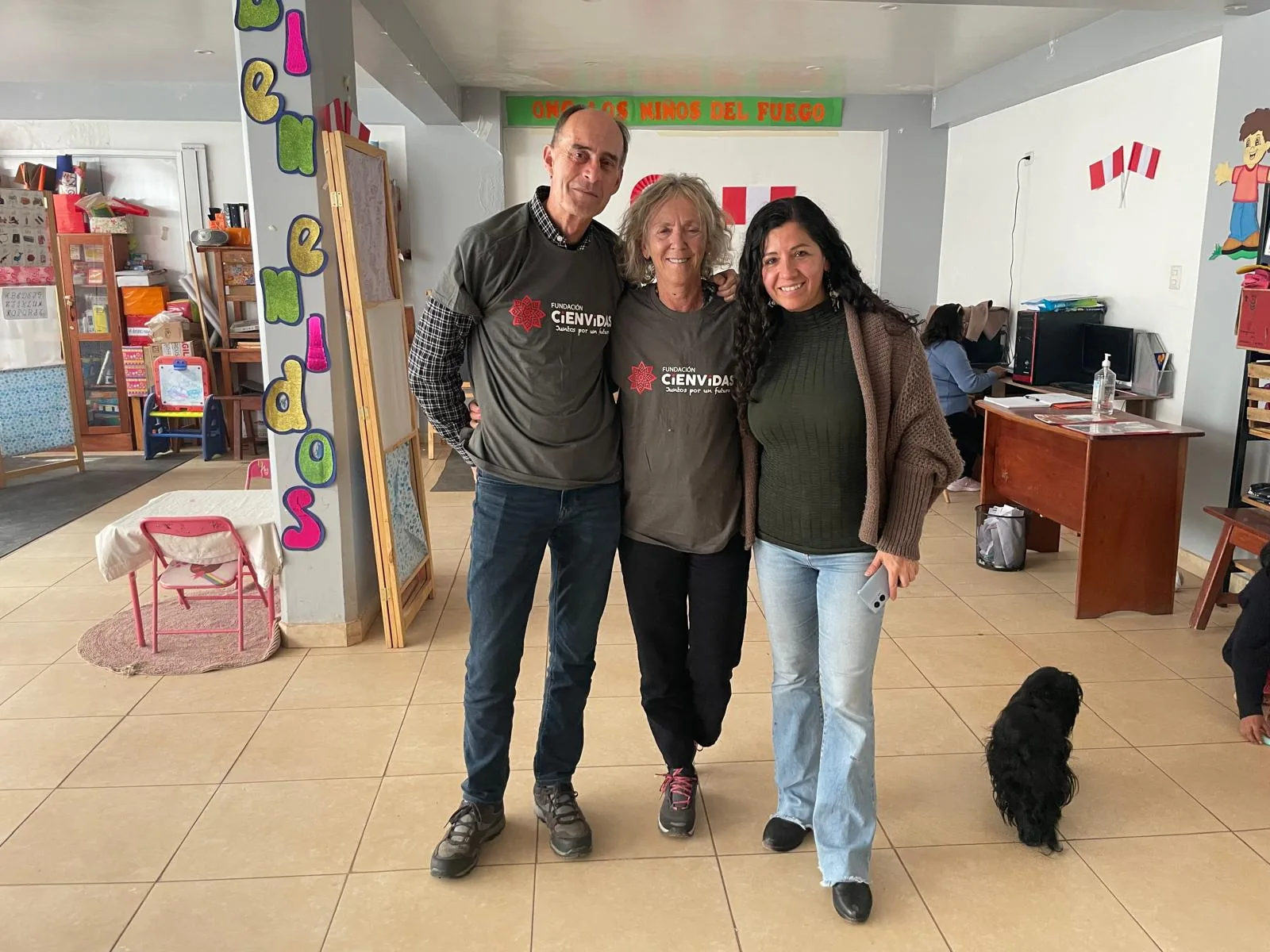
Volunteers stay in a hostel close to Cusco’s historic centre, usually sharing a room with another volunteer. A private room may be requested for an additional cost. Living with other volunteers is part of the experience and often creates friendships that continue long after the trip.
Best time to volunteer in Cusco
You can join our projects in Cusco throughout the year. The dry season, approximately from May to September, brings sunnier days, less rain and cooler temperatures, making it a good time to combine volunteering with cultural visits.
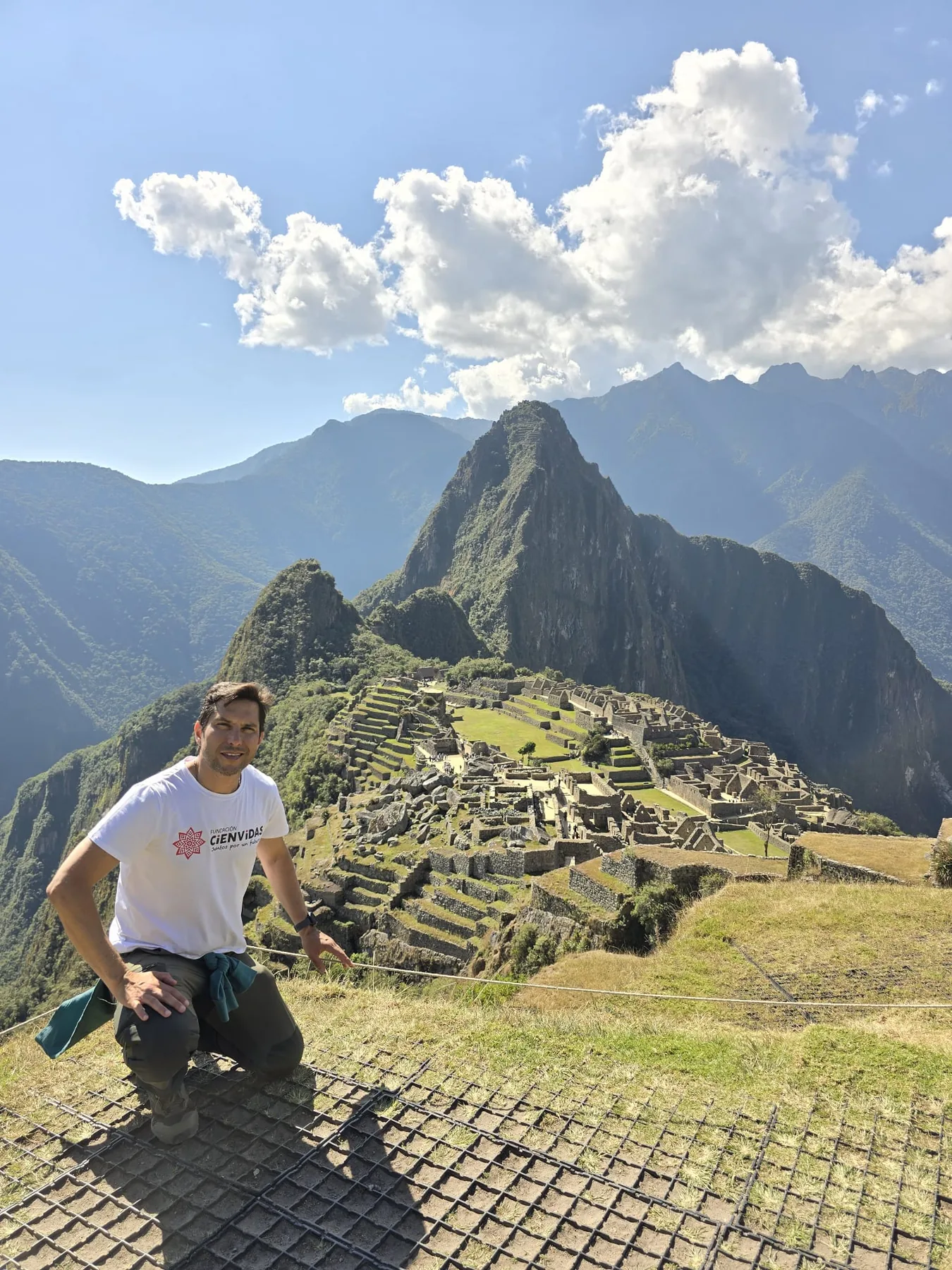
The rainy season, roughly from November to March, makes the landscape greener and more lush, although rain is more frequent, especially in the afternoons. Whatever time of year you choose, the educational projects continue to run and volunteers collaborate normally with the local teams.
Why choose Fundación CiENViDAS?
Fundación CiENViDAS has years of experience developing international volunteering programs focused on children and education in different countries. Our work in Cusco is carried out alongside local organisations that understand the needs of the community and help ensure that every project has a real, positive impact.
When you choose CiENViDAS, you will find responsible programs, support before and during the trip, projects connected to local needs, small groups, transparency and an experience that combines solidarity, learning and cultural exchange.
We believe that volunteering is not only about helping. It is also about listening, learning and building relationships based on mutual respect. If you want to explore other destinations too, you can read our guide to the best volunteering destinations for young travellers or discover how educational volunteering can create real impact.
Frequently asked questions
Can I volunteer in Peru with Fundación CiENViDAS?
Yes. Fundación CiENViDAS offers educational volunteer programmes in Cusco, Peru, where volunteers support children, young people and local teams through school reinforcement, creative activities, English practice, arts and sports.
Do I need teaching experience to volunteer in Cusco?
No. Teaching experience is not required. Volunteers collaborate alongside teachers and coordinators, so the most important qualities are responsibility, patience, motivation and willingness to learn.
What is the minimum stay for volunteering in Peru?
The minimum stay for the Cusco programmes is two weeks. Additional weeks or extra days may be possible depending on availability and the needs of the project.
When is the best time to volunteer in Cusco?
You can volunteer in Cusco throughout the year. The dry season, from around May to September, is especially popular because there is less rain and it is easier to combine the project with cultural visits.
What does the volunteer programme include?
The programme includes airport pick-up in Cusco, transfer to the accommodation, orientation, accommodation, daily transport to the project, three meals a day, local coordination, airport transfer at the end of the stay and volunteer certificates.