Would you like to discover a different culture, contribute to community projects and share your time with others? Volunteering in Nepal gives you the chance to learn from local people and take part in educational and social initiatives.
Fundación CiENViDAS offers several programs in Kathmandu, the capital of Nepal. You can support teachers in schools, contribute to educational activities in a Buddhist monastery, join a project for children with disabilities, take part in a shorter travel and volunteering program, or volunteer as a family. This guide explains the programs, the requirements and how to prepare for your stay.
If you are choosing your first project, read our guide to ethical volunteering and trustworthy organisations. You can also browse the international volunteering programs offered by CiENViDAS.
What volunteering options are available in Nepal?
CiENViDAS currently lists five ways to volunteer in Nepal. Each has different activities and a different rhythm. The right choice depends on your interests, skills, available time and the kind of experience you want.
- Teaching in a Kathmandu school.
- Teaching young Buddhist monks.
- Supporting children with disabilities.
- Nepal Experience: 11 days combining volunteering and travel.
- Family volunteering.
1. Teaching in a Kathmandu school
What does this project involve?
Public schools in Kathmandu are supported by the government and local communities. Volunteers work alongside local teachers to reinforce classroom learning. Previous teaching experience is not essential: the project team provides guidance, lesson planning and teaching materials.
You may help with English, mathematics, science, music, crafts, sports and homework support. The specific tasks depend on the school and its pupils. Volunteers can also help teachers prepare lessons and classroom materials. What matters most is a willingness to learn, share your skills and follow the direction of the local education team.
Volunteers may teach English, mathematics, science or creative subjects such as music and crafts; help with sport and educational games; offer homework support; and prepare materials with teachers. The school tutor and the local coordinator help plan activities and identify what each group needs.
Read the Kathmandu teaching program details.
2. Teaching young Buddhist monks
How does volunteering in a monastery work?
This program takes place at a school within a Buddhist monastery in central Kathmandu. The monastery supports pupils from mountain villages with education, food and accommodation. Volunteers contribute to their learning while discovering a different educational and cultural setting.
Teachers are welcome, but a professional teaching qualification is not required for every activity. The project provides materials, planning and daily support. Depending on the class, you may help with mathematics, science, computing, creative activities, physical education, homework and teaching materials. Respect for Buddhist customs, rules and daily routines is essential.
The pupils have different educational levels. Depending on the needs of their classes, volunteers can help with mathematics, science and computer skills, organise music or craft activities, support sports sessions and assist with homework. Local teachers retain responsibility for the lessons and the children.
Explore the Buddhist monks teaching program.
3. Supporting children with disabilities
What does the project involve?
The project works with an NGO in Kathmandu that supports, cares for and educates 55 children, including children with physical disabilities and children from families facing severe economic hardship. Volunteers join the daily activities and support learning under the direction of the local team.
Possible tasks include helping with nursery activities, practising English conversation, supporting homework, organising activities on Saturdays or holidays, and assisting with office or general household tasks. Experience in childcare, psychology, therapy or physiotherapy may be useful, but each person’s contribution must fit the project’s needs, their skills and the supervision available. Volunteers do not replace qualified staff or provide unsupervised specialist care.
The aim is to contribute to the children’s learning, autonomy and inclusion while respecting their abilities and the work already done by local staff. Ask for a clear task description before travelling so your role supports the team rather than replacing it.
See the children with disabilities program.
4. Nepal Experience: volunteering in 11 days
Can you volunteer in Nepal if you have limited time?
Nepal Experience combines volunteering in Kathmandu with cultural visits to Chitwan and Pokhara. Its 11-day format is designed for people who want an organised introduction to the country while taking part in community activities. It runs on specific dates, so check the current schedule and availability with CiENViDAS before booking travel.
Activities may include improving school or nursery spaces with murals and educational images, children’s games, and creative workshops involving drawing, painting, music or dance. The exact work depends on the program schedule and the needs of the projects visited. Cultural visits and support during the trip form part of the experience.
The school improvement activities can include murals, drawings and educational images intended to make classrooms more welcoming. Recreation and creative workshops can involve games, drawing, painting, music and dance. The precise activities depend on the projects and the itinerary for each departure.
Read about Nepal Experience and confirm upcoming dates.
5. Family volunteering
Why volunteer as a family?
Volunteering can be a shared family experience. Parents and children can discover another culture, spend time together and learn through participation in community projects. Activities are adapted to the length of the stay, the needs of each project and the ages and abilities of family members.
Possible activities include helping to improve school or nursery spaces, supporting local teachers, joining initiatives for women and girls, and taking part in supervised educational games with children. Confirm the minimum ages, safeguarding rules and suitable tasks with the team before applying. Our India or Nepal family volunteering guide can help you compare destinations.
Families often value the chance to spend time together, learn about different ways of life and practise cooperation. A family placement should also work for the host project: tasks may include school decoration, classroom support, activities for women and girls, or supervised games and homework support. The local team decides what is appropriate for each family member.
Explore the family volunteering program in Nepal.
What profile and requirements do you need?
Most activities do not require previous volunteering experience. Interest in other cultures, willingness to collaborate and an open attitude matter most. The regular programs ask participants to be at least 18 at the start, have basic English, submit a CV, complete the pre-registration form and provide a criminal-record certificate. Experience in childcare, psychology, therapy or physiotherapy is especially valued for the project supporting children with disabilities.
If you are unsure which project suits your experience, ask CiENViDAS to explain the tasks and supervision before choosing. Younger applicants may also find our guide for young volunteers useful.
Tasks, boundaries and safeguarding
Each program has different responsibilities. In schools, you may contribute to classes, sports, creative workshops and homework support. In the disability project, tasks focus on daily activities and assisting the responsible staff.
Follow the coordinator and local team’s instructions, adapt to the project’s actual needs, respect children and families, and stay within your assigned tasks and abilities. Specialist therapeutic or care activities require suitable qualifications and supervision. Responsible volunteering begins with listening to the people who run the projects every day.
How long do the programs last, and where will you stay?
Program duration
Regular projects have a minimum duration of two weeks. Nepal Experience is the 11-day exception and operates on specific dates. Confirm the calendar, arrival arrangements and availability for the program you choose before buying flights.
Accommodation and meals in Kathmandu
Program accommodation is in the Thamel area of Kathmandu, close to shops, restaurants and transport. According to the program information, the volunteer house has shared rooms, private bathrooms, common spaces, Wi-Fi, laundry facilities and storage. A coordinator supports volunteers during their stay. Facilities listed for the volunteer house include rooms shared by one to four people, a terrace, a shared lounge and dining area, Wi-Fi, laundry facilities, refrigerators and lockers. Confirm the arrangement that applies to your dates, particularly if you travel as a family.
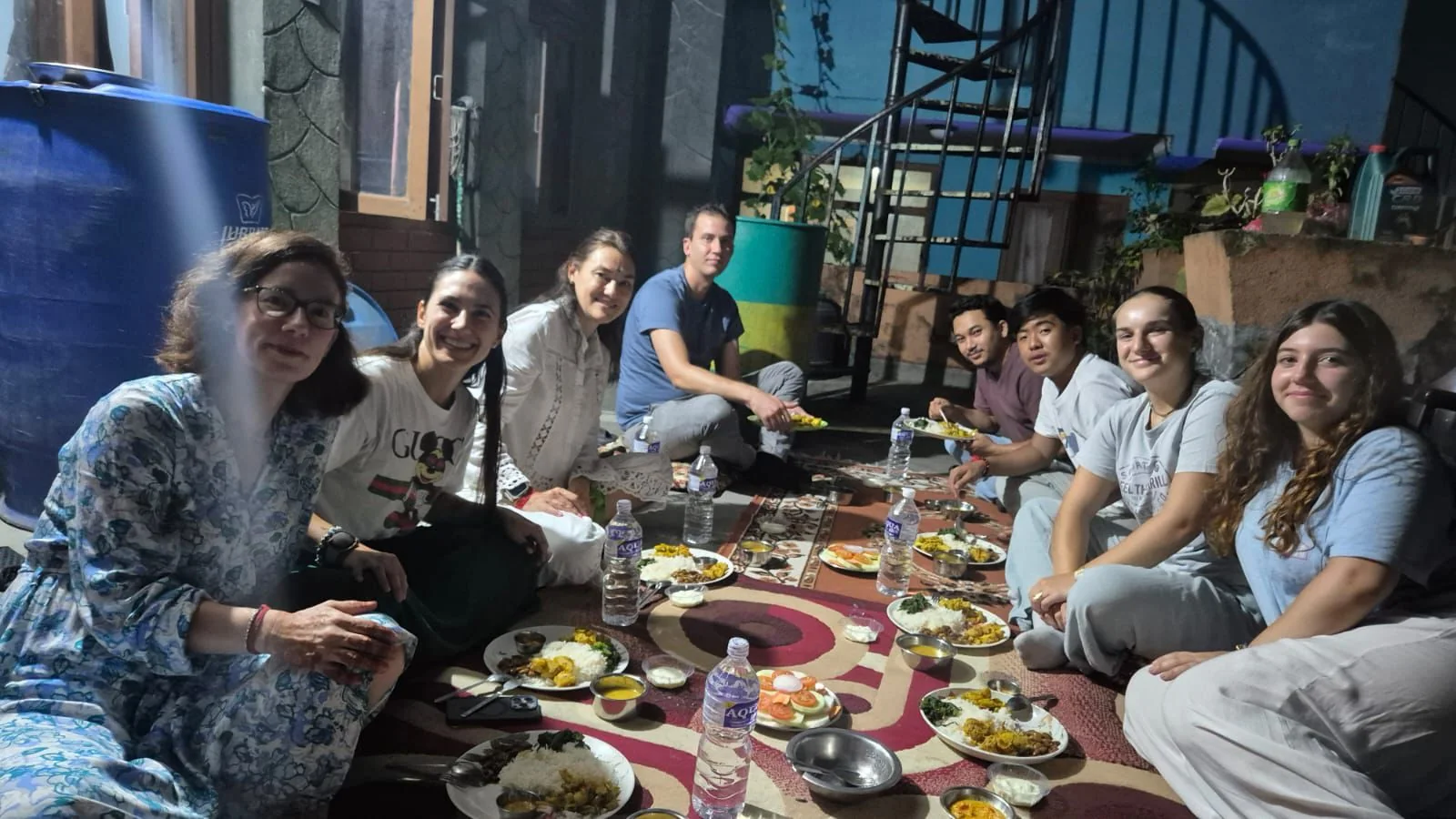
Three meals a day are included in the regular programs, with local dishes that may contain rice, pulses, vegetables, eggs or chicken. Tell the team about allergies or dietary needs before applying, and confirm the accommodation and meals included in your particular program.
Support during your stay
A coordinator receives volunteers at the airport and supports travel to the projects. The team is available during the stay to help with practical questions and the activities assigned by the local project.
When should you travel, and how can you prepare?
Your dates depend on the project calendar and your availability. Nepal Experience has scheduled departures; regular projects offer a longer stay. Ask about current places and the project’s needs before reserving travel.
Prepare your documents, learn about the local culture and discuss your tasks with CiENViDAS in advance. This helps you arrive with realistic expectations about what you will do and how you can contribute.
Travel documents, health and insurance
Entry rules depend on nationality, the purpose of travel and current regulations. Before booking, check the Nepal Department of Immigration and the Spanish travel advice for Nepal if it applies to you. Ask the project team which documentation is suitable for the activities you will undertake.
Health advice depends on your itinerary and personal circumstances. Consult a travel-health professional before departure. Review your travel and medical insurance, including its limits and exclusions, so it covers the activities you plan to undertake.
How do you request information about volunteering in Nepal?
If one of these programs interests you, open its program page and complete the pre-registration form. CiENViDAS can then learn about your experience, interests and availability and help you choose the most suitable option.
Whether you want to spend several weeks in a school, support the disability project, teach in a monastery or volunteer with your family, start by comparing the programs and confirming current conditions with the team.
Next step: explore the volunteer programs and select the Nepal project that fits you.
Plan your volunteering experience
Before choosing your placement, read our guide to volunteering abroad costs and inclusions to compare fees, covered services and expenses to budget for separately.
To compare roles, language requirements and school calendars, read our guide to educational volunteering abroad.